

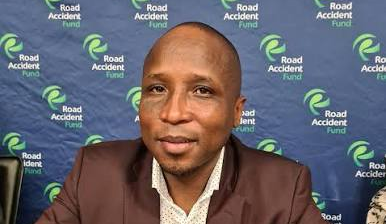
Former Road Accident Fund (RAF) chief executive Collins Phutjane Letsoalo has lost his bid to secure a performance bonus worth more than R2.7 million after the Commission for Conciliation, Mediation and Arbitration (CCMA) found that he had not met the requirements to qualify for the payment.
Commissioner James Ngoako Matshekga dismissed Letsoalo’s claim in full in an arbitration award handed down on 28 August 2026, finding that the RAF had not committed an unfair labour practice by declining to pay the former CEO a discretionary annual performance bonus for the 2024/25 financial year.
The dispute centred on whether Letsoalo qualified for the bonus under the RAF’s own performance management and remuneration policies.
The R2.7 million claim
Letsoalo had been employed as the RAF’s CEO on a fixed-term contract from August 2020 until his employment ended in August 2025.
His annual all-inclusive remuneration package was R5,482,906. He argued that he was entitled to a performance bonus equivalent to 50% of that package, an amount exceeding R2.7 million.
He referred the dispute to the CCMA in November 2025, arguing that the RAF’s failure to pay the bonus amounted to an unfair labour practice in terms of the Labour Relations Act.
Conciliation did not resolve the dispute and the matter proceeded to arbitration.
Letsoalo represented himself during the arbitration, while the RAF was represented by advocates ESJ Van Graan SC and J Hlongwane.
Why the CCMA rejected his claim
At the heart of the dispute was whether Letsoalo was a qualifying employee under the RAF’s bonus policy.
According to the arbitration award, the RAF’s Accounting Authority had approved performance bonuses for the 2024/25 financial year. However, the bonuses were subject to employees meeting specific requirements, including completing a formal performance assessment and having a signed-off performance score.
The commissioner found that Letsoalo did not have a completed formal assessment or a final performance score for the relevant period.
“The applicant’s performance was not assessed, and he did not have a performance score,” Matshekga found.
The absence of a performance assessment was critical because the bonus was discretionary and linked to the RAF’s established performance-management process.
The commissioner therefore found that the RAF could not be said to have unfairly withheld a bonus from Letsoalo when he had not satisfied the conditions required to qualify for it.
Letsoalo’s argument
Letsoalo disputed the RAF’s position and sought to place responsibility for the absence of a final performance score on the organisation.
During his closing arguments, he suggested that if his performance score had not ultimately been processed, this was attributable to RAF employees responsible for the process.
However, Matshekga rejected this argument.
The commissioner found that Letsoalo’s own argument effectively confirmed that there was no valid completed assessment on which a performance bonus could be based.
The dispute was therefore not simply about whether Letsoalo had performed well during his time as CEO. It was about whether the formal requirements for the payment had been met.
Witnesses called in the dispute
Letsoalo called former RAF board chairperson Lorraine Francois and current chief governing officer Mampe Kumalo as witnesses.
The RAF, meanwhile, called three senior managers from its human resources division.
The commissioner found no evidence that the RAF had applied its bonus requirements inconsistently or unfairly compared with other employees in similar circumstances.
That finding was important because an unfair labour practice claim would have required evidence that the Fund had acted unfairly in applying its performance and bonus policies.
Instead, the arbitration found that the available evidence did not establish such unfair treatment.
The RAF’s troubled financial backdrop
The dispute comes against the backdrop of years of controversy surrounding the RAF, one of South Africa’s most closely scrutinised public entities.
The Fund provides compensation and rehabilitation to people injured in motor vehicle accidents, as well as families of people killed in road crashes. It is primarily funded through the fuel levy.
The organisation has faced persistent criticism over its financial position, governance, procurement and claims administration.
Those concerns have also placed executive remuneration under the microscope.
The RAF’s 2025 annual report showed that Letsoalo received a substantial remuneration package during the financial year, including a performance bonus of R2.773 million. Reports on the RAF’s executive remuneration subsequently triggered questions about how bonuses were awarded at an organisation facing severe financial and operational challenges.
Business Maverick reported earlier this month that Letsoalo was among RAF executives who received significant performance bonuses despite the Fund’s continuing governance and service-delivery problems.
The latest CCMA matter, however, concerns a separate claim relating specifically to the 2024/25 bonus and whether Letsoalo met the requirements to qualify for it.
Letsoalo’s controversial final months at the RAF
The bonus dispute is only one chapter in the former CEO’s increasingly contentious relationship with the Fund.
Letsoalo came under intense scrutiny in 2025 amid a series of disputes involving the RAF, Parliament and the Transport Ministry.
He was placed on special leave in May 2025 and later suspended. One of the major issues was his refusal to appear before Parliament’s Standing Committee on Public Accounts (SCOPA), which was investigating problems at the RAF.
Letsoalo challenged his suspension in the High Court, but his application was dismissed. A separate High Court judgment in 2025 dealt with his contractual dispute with the RAF.
His fixed-term contract subsequently came to an end in August 2025.
Transport Minister Barbara Creecy confirmed at the time that Letsoalo was no longer CEO.
Before his departure, Letsoalo had also been embroiled in controversy over allegations relating to RAF procurement and expenditure, including questions surrounding an alleged R79 million office lease. He denied wrongdoing and said the RAF had followed the required processes.
SCOPA scrutiny and the wider RAF crisis
The former CEO’s tenure has also featured prominently in parliamentary scrutiny of the RAF.
In June 2026, ActionSA welcomed a SCOPA resolution to lay criminal charges against Letsoalo over his failure to comply with a parliamentary instruction to appear before the committee. The party said the move followed concerns about financial mismanagement and governance failures at the Fund.
The RAF’s financial difficulties have added further pressure.
Reporting on its 2025 financial position has highlighted substantial liabilities, outstanding claims and continuing concerns about the Fund’s ability to meet its obligations.
This has made executive remuneration particularly contentious, with critics questioning how large bonuses could be justified while accident victims continue to experience delays and difficulties with claims.
ActionSA MP and SCOPA member Alan Beesley previously described the executive bonuses as “morally wrong and shocking”, arguing that the Fund’s poor performance made the payments difficult to justify.
No costs order
Despite dismissing Letsoalo’s claim, the commissioner did not order either party to pay costs.
The effect of the award is that Letsoalo’s attempt to compel the RAF to pay the additional performance bonus has failed at the CCMA.
The commissioner’s finding was ultimately based not on whether Letsoalo was entitled to recognition for his work as CEO, but on whether he had satisfied the formal requirements governing the discretionary bonus.
According to the award, he had not undergone the required performance assessment and did not have the necessary signed-off performance score.
As a result, the CCMA found no unfair labour practice and dismissed his claim in full.
