



Posts List





Health
250 000 livelihoods hang in the balance: Tongaat Hulett crisis deepens as Mkhwanazi leads organised crime probe
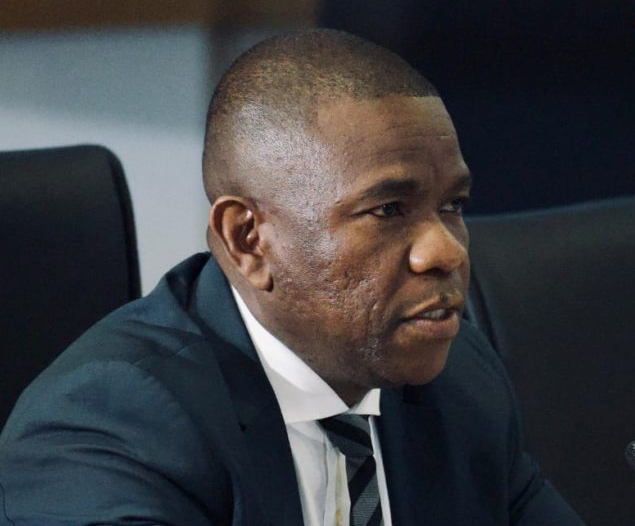
Tongaat Hulett’s battle for survival has entered another critical phase, with KwaZulu-Natal police commissioner Lieutenant-General Nhlanhla Mkhwanazi taking personal charge of an active investigation into alleged organised crime linked to the sugar giant’s liquidation, while uncertainty over funding threatens workers, sugarcane growers and communities dependent on the industry.
The latest developments have raised fresh questions about what happened to one of South Africa’s most established sugar producers, whether its proposed business rescue can be completed, and who will ultimately be held accountable if criminal conduct is established.
On Friday, 23 October, Mkhwanazi convened a closed-door meeting at the South African Police Service’s provincial headquarters in Durban. The meeting brought together Tongaat Hulett’s business rescue management, the Industrial Development Corporation (IDC), sugarcane growers and representatives of the Zulu Royal Household.
The discussions took place against the backdrop of an active police investigation into alleged organised crime linked to the company’s liquidation, as well as fears that the company could struggle to meet its immediate financial obligations.
SAPS spokesperson Colonel Robert Netshiunda confirmed that the investigation was active but declined to identify the complainant or disclose when the docket was opened, citing operational sensitivity.
The meeting was held privately, with journalists excluded and attendees not making themselves available for interviews afterwards.
The investigation does not mean that criminal wrongdoing has been established. Police have not publicly disclosed the full allegations, named any suspects in connection with this particular probe or announced arrests arising from it.
Mkhwanazi steps into the Tongaat Hulett crisis
Mkhwanazi’s involvement is significant because the matter is no longer confined to a corporate restructuring dispute. Police are now investigating allegations of organised crime linked to the company’s liquidation, while the business rescue process remains under pressure from competing commercial interests, outstanding funding arrangements and litigation.
However, the precise scope of the criminal investigation remains unclear. SAPS has not publicly detailed the conduct under investigation, the evidence being examined or whether investigators are focusing on particular transactions, decisions or individuals.
The distinction is important because Tongaat Hulett has faced several separate legal and financial disputes. The latest investigation must not be confused with the existing criminal case involving former executives and a former auditor over alleged financial misrepresentations.
Another important development is the absence of Vision Group, the selected buyer of Tongaat Hulett’s businesses and assets, from the meeting convened by Mkhwanazi.
The consortium is led by businessman Robert Gumede and is central to the adopted business rescue plan. No official reason has been publicly given for its absence from the meeting.
The absence raises questions about how the parties involved in the rescue will coordinate the next steps, particularly because Vision’s proposed acquisition, the IDC’s funding and the business rescue practitioners’ responsibilities are closely connected.
There is, however, no publicly confirmed evidence that Vision’s absence means the consortium has been removed from the rescue process or that the adopted plan has been overturned.
The financial crisis behind the investigation
Tongaat Hulett has been operating under business rescue since 27 October 2022, following years of financial distress and the fallout from an accounting scandal that damaged confidence in the company.
The company’s shares were suspended from trading on the Johannesburg Stock Exchange in July 2022 after it failed to publish its annual financial results for the year ended March 2022.
The crisis followed the discovery of serious accounting irregularities. Investigations found that the company’s reported profits had been overstated by billions of rand over several years, including through the alleged manipulation of revenue recognition and fictitious cane supply agreements.
The scandal triggered criminal proceedings and a major restructuring process. Tongaat Hulett subsequently entered business rescue, placing control of the company in the hands of business rescue practitioners.
The rescue process has since been complicated by disputes over funding, competing proposals to acquire the business and litigation over the implementation of the adopted plan.
The immediate concern is whether the company can secure the financial arrangements required to continue operating while the transfer of its businesses and assets is completed.
Tongaat Hulett has relied on post-commencement finance from the IDC to support working capital and keep its operations running during business rescue.
In an October notice to affected parties, the business rescue practitioners confirmed that the facility and its final repayment date had been extended to 30 November 2026. The notice refers to a R2.5 billion commitment secured in favour of the IDC, while the wider rescue arrangement has been reported as involving approximately R2.75 billion in post-commencement finance.
The funding is intended to support the company’s working capital requirements while the remaining transactions needed to implement the business rescue plan are finalised.
But the extension is not a permanent solution. The money owed must be repaid in full or, at the IDC’s discretion, restructured into a term loan on terms acceptable to the corporation before the company’s businesses and assets can be transferred as going concerns.
This makes the end of November a major deadline for the rescue process.
What happens to the Vision Group deal?
The adopted business rescue plan provides for the sale of Tongaat Hulett’s businesses and assets as going concerns to the Vision consortium.
The plan followed the failure of an earlier recapitalisation proposal that would have converted debt into equity. After shareholders did not approve the equity subscription underpinning that proposal in August 2024, the alternative transaction in the adopted plan became the route towards completing the rescue.
The process has been challenged by RGS Group Holdings, which has pursued legal action against the business rescue plan and the selection of Vision.
In July 2026, the KwaZulu-Natal High Court dismissed key relief sought by RGS in its counter-application. RGS subsequently filed an application for leave to appeal, which the business rescue practitioners said would be opposed.
Pending the determination of that application, the court order remains in effect and the Vision plan remains the adopted business rescue plan.
The litigation has therefore created uncertainty around the timing and completion of the transaction, but it has not, on the information publicly available, displaced the adopted plan.
In June, the IDC, Vision and the business rescue practitioners signed a binding agreement connected to the rescue. Under the proposed structure, the IDC’s funding would be converted into a 25% equity stake in Vision’s Southern African sugar operations, with Vision holding the remaining 75%.
The arrangement is intended to provide a route towards a more sustainable ownership and funding structure. However, the remaining agreements and alternative arrangements with the IDC and Vision still need to be finalised to enable the transfer to proceed.
The business rescue practitioners have indicated that agreements covering certain operations in Mozambique, Botswana and Zimbabwe had been signed, while further agreements covering the South African operations and the balance of Mozambique investments were still expected.
The coming weeks will therefore be crucial in determining whether the transaction can be completed before the funding deadline.
JSE delisting set for 3 November
Another major date is Tuesday, 3 November 2026, when Tongaat Hulett is scheduled to be removed from the JSE’s Main Board.
The company’s shares have been suspended since July 2022 and have not traded on the exchange since then.
The JSE’s decision to remove the listing follows the company’s failure to meet its listing requirements. The business rescue practitioners and the company’s current directors did not oppose the delisting, saying it was contemplated in the adopted business rescue plan.
The practitioners have stressed that delisting does not, by itself, mean the operating businesses are closing or that the business rescue proceedings have ended. The intention remains to sell the businesses and assets as going concerns.
However, the delisting has serious implications for existing shareholders. The adopted plan does not anticipate that value will accrue to them, and no offer or payment is expected to be made to shareholders as a result of the delisting.
The change will also mean that the company will no longer publish announcements through the JSE’s Stock Exchange News Service after it is delisted. Business rescue notices and status reports are expected to remain available through the company’s business rescue communications.
The delisting is therefore a significant milestone in the restructuring, but it does not resolve the company’s funding problems or the legal disputes surrounding its future.
250,000 livelihoods at risk
The consequences extend well beyond the company’s shareholders and executives.
Tongaat Hulett directly employs about 3,000 people in South Africa, but its operations support a much wider network of growers, transporters, suppliers, contractors and rural businesses.
Industry estimates cited in recent reporting put the number of livelihoods potentially exposed to disruption at approximately 250,000. The figure reflects the broader sugar value chain rather than the number of people directly employed by Tongaat Hulett.
South Africa’s sugar industry supports thousands of growers, including small-scale farmers who depend on mills to process their sugarcane. If a mill stops operating or payments are delayed, growers may struggle to sell harvested cane, pay workers or finance the next planting cycle.
Transporters, agricultural suppliers and businesses in sugar-producing communities can also feel the impact.
South African Sugar Association chief executive Sifiso Mhlaba has stressed the interdependence between growers and millers.
“Growers and millers are interdependent, therefore any disruption in their operations is bound to have a negative impact on the whole value chain,” Mhlaba said.
The warning captures the stakes of the current crisis. A failure to complete the rescue would not only affect Tongaat Hulett’s employees but could also place additional pressure on growers and communities whose economic activity relies on its mills.
Recent reports have raised concerns that October’s payroll could be the last one covered without further funding certainty. SAPS said fears about salaries and the wider economic consequences helped prompt the latest stakeholder meeting.
The company’s ability to meet its obligations to workers and growers will depend on available cash, continued operations and whether the outstanding rescue arrangements can be completed.
What is the Zulu Royal Household’s position?
The Zulu Royal Household has also been drawn into discussions about Tongaat Hulett’s future because of the company’s historical and economic importance to KwaZulu-Natal.
The Vision Group has presented a turnaround plan that envisages expanding beyond traditional sugar production. The proposals have included producing ethanol for petrol blending, generating electricity from bagasse and exploring the conversion of carbon dioxide into medical oxygen.
Gumede has also outlined plans to grow the number of growers supplying the company and increase employment if the turnaround succeeds.
However, concerns have been raised about whether the promises will be delivered and how proposed benefits for workers and communities will be implemented.
A letter from the King’s private office to Trade, Industry and Competition Minister Parks Tau questioned aspects of the proposed transaction, including the IDC’s planned 25% stake and the transparency of commitments relating to worker and community shareholding.
Those concerns underscore the need for clear agreements, measurable commitments and transparent communication with affected communities.
The proposed diversification could create new revenue streams if implemented successfully, but these remain part of a turnaround vision rather than proof that the company’s immediate funding challenges have been resolved.
The separate R3.5 billion fraud case
The latest organised crime investigation must also be distinguished from the existing criminal case involving seven former Tongaat Hulett executives and a former auditor.
The accused are Peter Staude, Murray Hector Munro, Michael Edward Deighton, Rory Edward Wilkinson, Kamasagrie Singh, Samantha Shukla and former Deloitte audit partner Gavin Dykes Kruger.
They face charges linked to alleged financial misrepresentations involving Tongaat Hulett and its property development subsidiary. The charges include fraud, as well as alleged contraventions of financial markets, company and organised crime legislation. Kruger also faces an additional charge relating to the auditing profession.
The State alleges that between March 2015 and September 2018, the accused acted in common purpose to misrepresent revenue generated from land sales, including through the alleged backdating of sale agreements. The State contends that the alleged misrepresentations caused the company’s financial reports to reflect incorrect revenue and profits.
The accused have not been convicted of these charges and are entitled to the presumption of innocence.
The matter was postponed in the Durban High Court to 18 March 2027 for a pre-trial conference after the State sought time to apply for a fresh racketeering certificate. The accused remain out on bail.
The case is an important part of the wider history of Tongaat Hulett’s collapse, but it is a separate court process from the active police investigation into alleged organised crime linked to the company’s liquidation.
What happens next?
Several developments will determine the direction of the crisis over the coming weeks.
- The SAPS investigation is expected to continue, although police have not publicly announced a timetable for further disclosures or identified suspects in the latest probe. Investigators will need to establish the facts and determine whether evidence supports criminal charges.
- The business rescue practitioners, Vision and the IDC must finalise the outstanding transaction documents and agree on arrangements for the funding facility before the 30 November deadline.
- The JSE delisting is scheduled to take effect on 3 November. It will not automatically close the mills or terminate business rescue, but it will mark a significant change in the company’s status.
- The legal challenge by RGS remains relevant to the rescue process. The application for leave to appeal is expected to be opposed, and the existing court order remains in force unless changed by a court.
- Employees, growers and other creditors will be watching closely for confirmation of salary payments, payments for delivered cane and the company’s ability to maintain operations through the transition.
- The Zulu Royal Household and other affected stakeholders are likely to continue seeking clarity about the proposed ownership structure, community benefits and the future of jobs and investment in the region.
The next major test is whether the parties can turn the adopted rescue plan into a fully funded, legally executable transaction before the IDC facility reaches its deadline.
A rescue under pressure
Tongaat Hulett’s crisis is now unfolding on three connected fronts: a criminal investigation into alleged organised crime linked to its liquidation, a contested business rescue transaction and an immediate funding challenge with consequences for workers and growers.
Mkhwanazi’s involvement has increased scrutiny of the circumstances surrounding the company’s future, but the investigation’s details remain limited and no conclusions about criminal responsibility can yet be drawn.
The company’s survival will depend on more than the outcome of the police probe. It will also require the completion of the sale, a workable funding structure, continued mill operations and confidence among the growers and communities that depend on the business.
With delisting scheduled for 3 November and the funding facility extended only until 30 November, the coming weeks could determine whether Tongaat Hulett’s operations transition into a new ownership structure or face renewed uncertainty.
For employees, growers and the broader sugar industry, the central question is no longer simply who will own Tongaat Hulett. It is whether the rescue can be completed in time to protect the livelihoods and economic activity tied to the company.
Economy
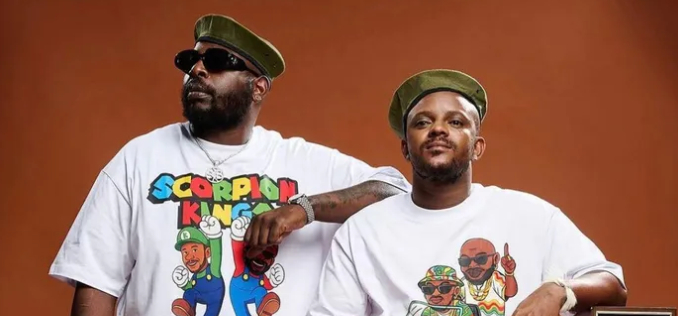
The Scorpion Kings’ burgers are all sold out, but the Scorpion Kings Live are back tonight on SABC 1
Before DJ Maphorisa and Kabza De Small were filling FNB Stadium with Amapiano, there was the hustle – and for Maphorisa, part of that hustle involved food.
Long before the Scorpion Kings name became synonymous with some of South Africa’s biggest musical moments, Maphorisa was finding different ways to make money while pursuing his music career.
“I used to deejay on weekends and I opened a tuck-shop at home just to have a cash flow and at school I used to sell sweets and lollipops,” Maphorisa said.
He explained that the money helped him save for his first car and travel between Pretoria and Johannesburg while working towards his music career.
So, years later, seeing the producer put his name to a burger collaboration feels like a rather delicious full-circle moment.
The Scorpion Kings – Maphorisa and Kabza De Small – teamed up with RocoMamas in September for the limited-edition King’s Feast, a menu inspired by their personalities, their music and plenty of South African flavour.
The collaboration ran until 30 September, meaning the burgers have now officially left the menu – but having tasted them, there is plenty to talk about.
Madumane Double – big, saucy and properly Mzansi
The DJ Maphorisa-inspired Madumane Double did not arrive quietly.
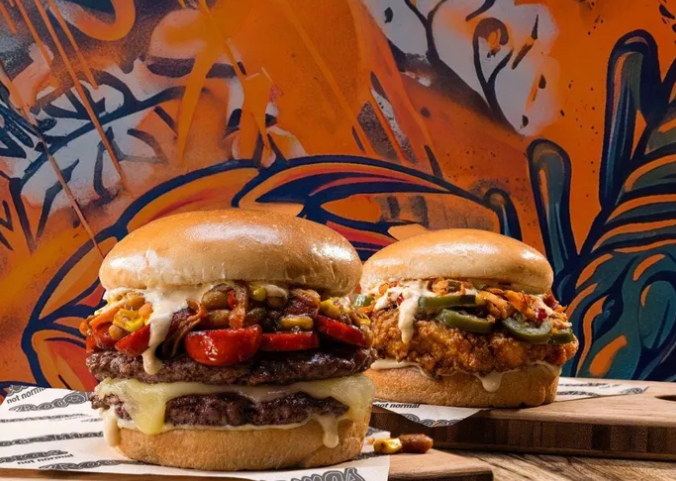
The burger featured a 200g double beef smash, chakalaka, chorizo and cheese, all packed into a brioche bun. RocoMamas positioned it as the “main drop” of the collaboration.
The first bite was very much about the beef, but then the chakalaka came through with that familiar South African kick.
Spicy, savoury and gloriously messy, it was the sort of burger that requires you to abandon any plans of eating neatly.
And there was something particularly kasi about that combination.
Chakalaka was not there as a gimmick. It gave the burger a distinctly South African personality, taking the familiar smashburger format and throwing in a flavour many Mzansi households know very well.
RocoMamas described the collaboration as burgers built by the two artists “the way they build a track – layer on layer until it hits.”
That description actually makes sense.
Papta Sting brings the heat
Then came Kabza De Small’s Papta Sting – and this one was for the spice chaser.
The burger combined southern-fried chicken with atchar and jalapeños on a brioche bun. RocoMamas summed it up neatly: “Sweet on the way in, sting on the way out.”
And that is pretty much the assignment.
The chicken brings the crunch, the atchar delivers that sweet-sour South African flavour, and then the jalapeño arrives with a little extra attitude.
It is the kind of burger that makes you pause after the first bite and ask yourself whether you really want another one.
Naturally, you do.
Kabza’s association with the burger also made sense because the collaboration was built around flavours that feel familiar to South African palates rather than trying too hard to reinvent the wheel.
It tasted like the kasi – with a RocoMamas twist
The King’s Feast was at its most interesting when it leaned into flavours that South Africans already know.
Chakalaka. Atchar. Pap balls. Big portions. Messy eating. Food made for sharing.
RocoMamas itself described the campaign as being inspired by the “grootmans of the yanos”, while its promotional material leaned heavily into the idea of bringing South African flavour to the menu.
That made the collaboration feel like more than simply putting two famous names on burgers.
Amapiano has always been closely connected to place, community, language, fashion, dance and everyday South African life. The King’s Feast borrowed from that same cultural vocabulary and put it on a plate.
And yes, chakalaka on a burger works.
There, we said it.
The timing was perfect
The RocoMamas collaboration formed part of the build-up to Scorpion Kings Live at FNB Stadium on 19 September.
RocoMamas was an official activation partner for the massive concert, alongside brands including SABC1, which was the official broadcast partner.
The King’s Feast was available throughout September before ending on 30 September.
So if you were planning to rush to RocoMamas today for a Madumane Double or Papta Sting, unfortunately, you have missed the boat – or in this case, the burger.
But there is another Scorpion Kings moment waiting tonight.
From the burger to the big screen
Scorpion Kings Live is making its television debut on SABC1 today, Saturday, 3 October, at 20:00.
The concert, which was staged at FNB Stadium on 19 September, will be broadcast for the first time on television, with a simultaneous broadcast on SABC Plus. SABC1 confirmed the broadcast as part of its partnership with the event.
For viewers who were not inside FNB Stadium, tonight is the chance to experience the scale of the show from home.
SABC Video Entertainment Marketing Manager Dichaba Phalatse described the concert as “more than a concert” and “a defining South African cultural moment”, saying SABC1 wanted to bring the energy of FNB Stadium to audiences across the country.
The Scorpion Kings themselves said: “Scorpion Kings Live was too special to be experienced for one night only.”
They added: “Now, for the first time, people across South Africa can relive that experience from wherever they are.”
And that is where the RocoMamas collaboration comes full circle.
The burgers may have disappeared from the menu, but the music is still very much on.
So, what was the foodie verdict?
The Madumane Double was the heavyweight – beefy, saucy, cheesy and carrying enough chakalaka to remind you that this was never meant to be just another burger.
The Papta Sting was the cheekier one – crispy chicken, atchar and jalapeño bringing the sweet-and-sting combination promised in the name.
Neither needed to pretend to be fine dining.
They were burgers.
Big, messy, youthful burgers with a distinctly South African accent.
And perhaps that was the point.
Maphorisa went from selling sweets and running a tuck shop to becoming one of the biggest names in Amapiano. Now his name has been attached to a burger loaded with chakalaka.
Not a bad journey.
The King’s Feast may have left RocoMamas on 30 September, but the Scorpion Kings are back on screen tonight.
So get your snacks sorted, turn up the volume and settle in for FNB Stadium from your sofa.
Just don’t blame us if watching Kabza and Maphorisa perform makes you hungry.
That part is on you.