

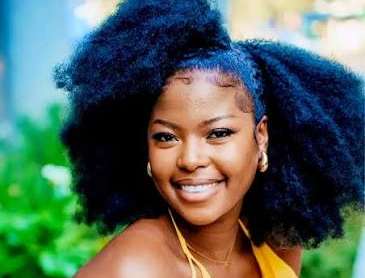
Award-winning singer-songwriter and Miss SA contestant, Azana has opened up about one of the most painful realities of her childhood, revealing that she personally experienced period poverty while growing up, a struggle that continues to affect millions of girls and women across South Africa today.
The musician, whose real name is Makhosazana Masango, shared her story as part of an awareness campaign aimed at breaking the stigma around menstruation and ensuring young girls have access to essential menstrual products.
Reflecting on her upbringing, Azana revealed that there were times when her family simply could not afford sanitary pads, forcing her to navigate one of the most vulnerable stages of adolescence without basic menstrual hygiene products.
“I know what it feels like to experience period poverty,” Azana said. “Growing up, there were times when we couldn’t afford sanitary pads. No girl should have to choose between her dignity, her education and something as basic as menstrual products.”
The award-winning singer said speaking publicly about her experience was important because too many girls continue to suffer in silence.
“I want young girls to know they are not alone. I’ve been there, and I understand how difficult it is,” she said.
Period poverty refers to the inability to access or afford menstrual products, clean sanitation facilities, pain medication, clean water and accurate menstrual health education. Beyond the physical challenges, it often carries feelings of shame, embarrassment and anxiety that can prevent girls from attending school, participating in sport or even socialising freely.
In South Africa, period poverty remains a widespread social issue despite years of advocacy. Parliamentary discussions on menstrual health have revealed that nearly one in three schoolgirls miss classes because they cannot access menstrual products, while about 83% of girl learners report irregular access to sanitary pads or tampons. The lack of proper sanitation facilities and menstrual health education further compounds the problem, affecting learners’ confidence, academic performance and overall wellbeing.
Research and advocacy groups have also found that many girls resort to using newspapers, old cloth, socks or other unsafe materials when sanitary products are unavailable, increasing the risk of infections while exposing them to humiliation and social stigma.
Although several provincial governments have introduced free sanitary pad programmes in public schools, access remains inconsistent, particularly in rural and under-resourced communities.
By sharing her own experience, Azana hopes to help dismantle the stigma surrounding menstruation while encouraging conversations about menstrual dignity.
“It’s something many people don’t talk about, but it’s a reality for so many girls. If sharing my story helps even one child feel seen or encourages someone to help another girl, then it’s worth it,” she said.
Her story has resonated with many South Africans who applauded her willingness to speak openly about an issue often hidden behind shame and silence.
For campaigners fighting to end period poverty, stories like Azana’s are powerful reminders that behind every statistic is a young girl trying to navigate school, friendships and growing up while lacking access to something as fundamental as a sanitary pad.
