

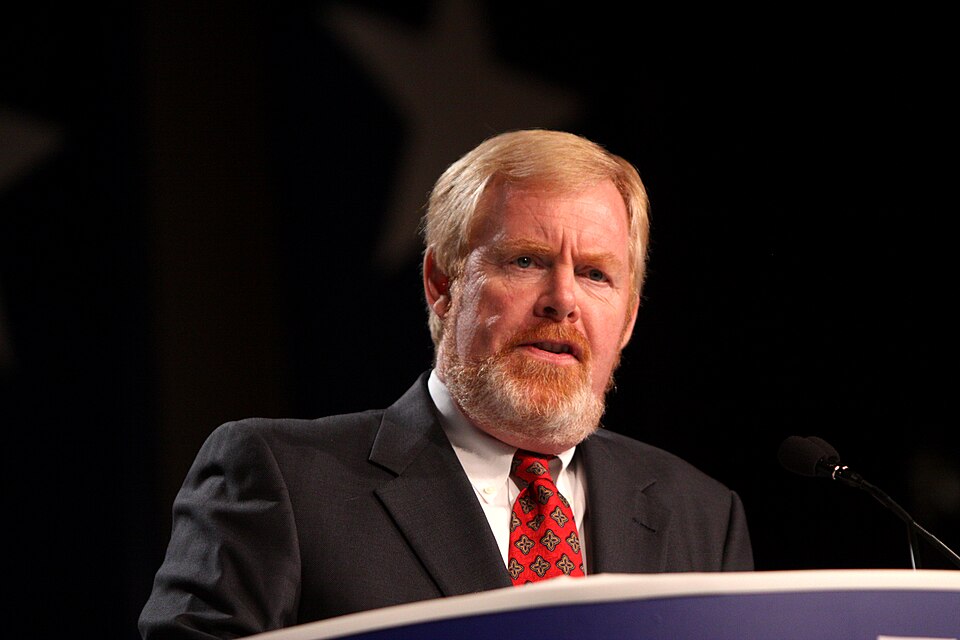
DIRCO has summoned US Ambassador Leo Brent Bozell III for another formal diplomatic reprimand, accusing the envoy of conduct it regards as inconsistent with diplomatic protocol as tensions between Pretoria and Washington continue to escalate.
The latest confrontation comes after weeks of increasingly public disagreements between the South African government and the administration of US President Donald Trump over South Africa’s domestic policies, foreign relations, land reform, race-based redress and the treatment of white Afrikaners.
Bozell was called in by the Department of International Relations and Cooperation (DIRCO) following a series of public comments critical of Pretoria’s position.
A US government official confirmed the meeting, describing it as Bozell being “called in” by DIRCO to discuss the bilateral relationship.
The official said Washington remained clear about what it expected from South Africa.
“We are not interested in diplomatic manoeuvring, procedural delays, or dialogue for dialogue’s sake. The ball is now squarely in the Government of South Africa’s court,” the official said.
The latest action has been described in reports as the second formal demarche issued to Bozell since he arrived in South Africa earlier this year, although it follows other formal diplomatic rebukes and warnings issued during the escalating dispute.
What is a demarche?
A demarche is a formal diplomatic communication through which one government conveys a position, protest or concern to another government.
It can involve summoning a foreign ambassador to a foreign ministry to explain or account for comments or conduct.
In Bozell’s case, the repeated use of the diplomatic channel has become a visible indication of just how strained relations between Pretoria and Washington have become.
DIRCO previously summoned Bozell in March, shortly after he took up his post, following controversial remarks he made about the “Kill the Boer” chant and South Africa’s judiciary.
At the time, International Relations Minister Ronald Lamola said the ambassador had been called in over what government considered “undiplomatic remarks”.
DIRCO Director-General Zane Dangor later said Bozell had apologised and expressed regret over remarks that had created the impression that he was not committed to working constructively with the South African government.
“He apologised and expressed regret, including for comments that appeared to undermine the judiciary,” Dangor said.
The ‘Kill the Boer’ controversy
One of the first major disputes centred on the controversial struggle-era chant “Kill the Boer, kill the farmer”.
Bozell publicly described the chant as hate speech and, during a business gathering, said he did not accept the South African courts’ interpretation of the matter.
“I don’t care what your courts say. It’s hate speech,” he said at the time, according to reports.
The comments immediately attracted criticism from the South African government, which stressed that the country’s courts are independent and that foreign diplomats are expected to respect constitutional institutions.
Bozell subsequently said his comments represented his personal view and that the US government respected the independence and findings of South Africa’s judiciary.
The incident prompted Parliament’s Portfolio Committee on International Relations and Cooperation to ask DIRCO to report on how it was handling the ambassador’s statements.
Committee chairperson Supra Mahumapelo said at the time that the ambassador’s remarks were regrettable and emphasised South Africa’s status as a constitutional democracy.
From the chant to BEE and land reform
The disagreements did not end there.
Washington has repeatedly raised concerns about South Africa’s Broad-Based Black Economic Empowerment policies, the Expropriation Act and land reform.
The Trump administration has also raised concerns about farm murders and what it describes as discrimination against white South Africans.
Pretoria has rejected the characterisation that its policies amount to racial persecution.
DIRCO has argued that South Africa’s redress policies are rooted in the country’s history of apartheid and racial exclusion.
In a statement issued earlier this month, the department said South Africa’s laws were intended to address the consequences of centuries of racial injustice.
“South Africa respects that the United States may hold different views regarding particular measures and their implementation,” DIRCO said, while insisting that South Africa’s democratic and constitutional sovereignty must be respected.
The department also said bilateral disputes should be addressed through diplomatic engagement rather than unilateral actions.
Trump’s demands and Ramaphosa’s response
The latest dispute follows a letter from US President Donald Trump to President Cyril Ramaphosa on 27 August.
Washington requested an update on a number of issues, including BEE, land reform, the “Kill the Boer” chant, farm murders and the US programme offering refugee status to white Afrikaners.
Ramaphosa subsequently responded to Washington, outlining Pretoria’s position and steps being taken on several of the issues.
According to Ramaphosa’s international policy adviser Alistair Ruiters, Pretoria believed it had made considerable progress in addressing some of Washington’s concerns.
South Africa has, among other measures, announced a review of BEE, signed the Prevention and Combating of Hate Crimes and Hate Speech Act and continued implementing a rural safety strategy.
But Washington has maintained that Pretoria has not done enough.
On 15 September, US Secretary of State Marco Rubio announced visa restrictions against unnamed South Africans involved in implementing policies Washington opposes.
Bozell subsequently warned that further measures could follow.
Lamola: ‘We are predictable and reliable partners’
The diplomatic confrontation comes despite Pretoria insisting that it does not want a breakdown in relations with Washington.
Speaking in the United States last week, Lamola said South Africa remained open to discussions with the Trump administration.
“South Africa remains open to engage with the U.S. administration on all the issues that they have put on the table,” Lamola said.
“We are predictable and reliable partners, and we see the U.S. as an important strategic partner.”
Lamola also rejected the idea of a tit-for-tat confrontation with Washington, despite the increasingly sharp exchanges.
He criticised Bozell’s suggestion that diplomacy had reached its limits, saying: “If you can’t dialog and you want to declare that dialog has run its course, you are in the wrong profession – you are not a diplomat.”
Foreign policy becomes another flashpoint
South Africa’s relations with the US have also been strained by Pretoria’s diplomatic relationships with countries including China and Iran.
In June, Bozell criticised South Africa’s engagement with both countries, arguing on social media that Pretoria’s policy of non-alignment amounted to a choice.
DIRCO pushed back, saying South Africa has the sovereign right to maintain relations with countries across the international system without being forced to choose sides.
“The Government of South Africa … reserves the right to cultivate and maintain bilateral relations across the entire global spectrum,” DIRCO spokesperson Chrispin Phiri said.
The disagreement illustrates one of the fundamental differences between Pretoria and Washington: South Africa maintains that its foreign policy is based on non-alignment, while the Trump administration has increasingly questioned Pretoria’s relationships with countries it considers strategic competitors or adversaries.
A relationship under pressure
The latest summoning of Bozell therefore comes against a much larger backdrop than one ambassador’s comments.
The two countries remain important economic and diplomatic partners, but their governments are increasingly disagreeing over South Africa’s domestic transformation policies, land reform, race relations, crime, the treatment of Afrikaners, South Africa’s foreign-policy choices and Pretoria’s legal action at the International Court of Justice concerning Israel.
At the same time, Washington has introduced measures affecting South Africans, while Pretoria continues to insist that dialogue remains possible.
For Bozell, the latest meeting with DIRCO is another chapter in an unusually turbulent beginning to his tenure in Pretoria.
For the South African government, it is a renewed warning that foreign diplomats are expected to raise disagreements through established diplomatic channels and respect the country’s constitutional institutions.
And for the broader South Africa-US relationship, the repeated confrontations have become a sign of just how difficult the diplomatic relationship has become under the current US administration.
