

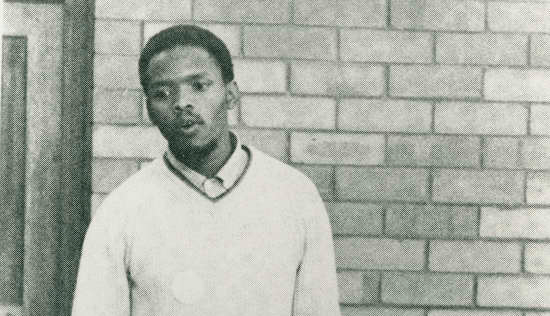
Nearly 49 years after Steve Biko died in apartheid police custody, shocking new forensic evidence has raised fresh questions about what really happened to the Black Consciousness icon in the days before his death.
A forensic pathologist has told the reopened inquest into Biko’s death that his horrific injuries could not have been caused by a single confrontation with police, as apartheid authorities originally claimed.
Dr Shakeera Holland, a specialist forensic pathologist who has conducted more than 5,000 autopsies, testified in the Gqeberha High Court that Biko suffered injuries at different times – some hours and others potentially days before his death.
Her evidence directly challenges the apartheid police version that Biko was injured during a “scuffle” with Security Branch officers.
‘Not a single incident’
Holland reviewed the original post-mortem conducted after Biko’s death on 12 September 1977.
She told the court there was no evidence that the extensive injuries recorded by the original pathologist had all been inflicted during one incident.
Instead, the injuries pointed to repeated trauma.
Biko had suffered multiple wounds, head injuries, a swollen brain, small haemorrhages, lung damage, signs of kidney failure and areas of brain necrosis.
Some of the injuries were consistent with blunt-force trauma from an object such as a pipe.
Holland also identified what are known as “tramline scars” – parallel patterned injuries that can be associated with a rod-shaped object.
Under questioning, she agreed that such injuries could also have been caused by a hosepipe.
The evidence comes just days after anti-apartheid activist Monde Mditshwa told the court about the alleged use of a green hosepipe by apartheid police to assault detainees – an object detainees reportedly called the “Green Mamba”.
The police version has long been disputed
Biko was arrested on 18 August 1977 at a roadblock near what is now Makhanda, then known as Grahamstown.
He was taken to the Security Branch in Port Elizabeth, now Gqeberha.
The apartheid police later claimed that Biko had attacked an officer with a chair and that he was injured during the struggle that followed.
That version was accepted during the original inquest into his death.
But the account was later seriously undermined.
Five former Security Branch officers – Harold Snyman, Daniel Siebert, Jacobus Johannes Oosthuysen Benecke, Rubin Marx and Gideon Nieuwoudt – applied for amnesty at the Truth and Reconciliation Commission in 1997.
They admitted that they had colluded and fabricated aspects of their accounts during the original investigation.
The TRC rejected their applications, finding their evidence contradictory and determining that they had not established a political motive for their actions.
Biko was only 30 when he died
Biko had spent 24 days in custody before medical assistance was sought after police reportedly noticed foam around his mouth.
By then, his condition had deteriorated severely.
On 11 September 1977, he was transported unconscious and shackled in the back of a police vehicle on a roughly 1,200km journey to Pretoria.
He died the following day.
He was just 30 years old.
The NPA says the original cause of death included extensive brain injury, acute kidney failure and uraemia.
The first inquest cleared the police
The original inquest, held in 1977, accepted the Security Branch’s version of events and found that Biko’s injuries had been sustained during a struggle.
No one was prosecuted.
The Eastern Cape attorney-general decided in February 1978 not to prosecute anyone over Biko’s death.
Almost five decades later, the case has been reopened.
The National Prosecuting Authority says the purpose of the new inquest is to place evidence before the court so that it can determine whether Biko’s death was caused by an act or omission that prima facie amounted to a criminal offence.
Biko family wants answers
For the Biko family, the reopened proceedings represent another chance to confront one of apartheid’s most notorious unresolved deaths.
Biko’s son, Nkosinathi Biko, has previously said the family wants the process to lead to justice and accountability.
The family has also expressed frustration at the delays surrounding the proceedings, including difficulties securing legal representation.
Nkosinathi previously described the dispute over funding as “undignified”, saying his mother should not have had to witness the family fighting for legal support at the start of the proceedings.
A symbol whose death changed South Africa
Steve Biko was the founder and leading figure of the Black Consciousness Movement, which encouraged black South Africans to reject apartheid’s psychological oppression and reclaim their dignity and political power.
His death sent shockwaves around the world and became a defining symbol of apartheid brutality.
The NPA says the reopening of the inquest is intended not only to establish the circumstances surrounding Biko’s death, but also to provide an opportunity for accountability and closure for his family and wider society.
Now, almost half a century later, forensic evidence is putting the injuries suffered by Biko back at the centre of the case.
