
The copyright fight over one of amapiano’s recognisable songs has taken another turn, with Mandla N’s Black Brain Pictures facing a fresh legal setback in a dispute that has grown from a R75,000 song licence into an R11 million claim.
The battle centres on “Ngixolele”, performed by Busta 929 and Boohle, which was used as the theme song of Black Brain Pictures’ e.tv drama The Black Door.
The Johannesburg High Court has now rejected a key part of Black Brain’s defence, although the court has not yet finally determined whether the production company must pay Mokima Music and Publishing the R11 million it is demanding.
How the dispute started
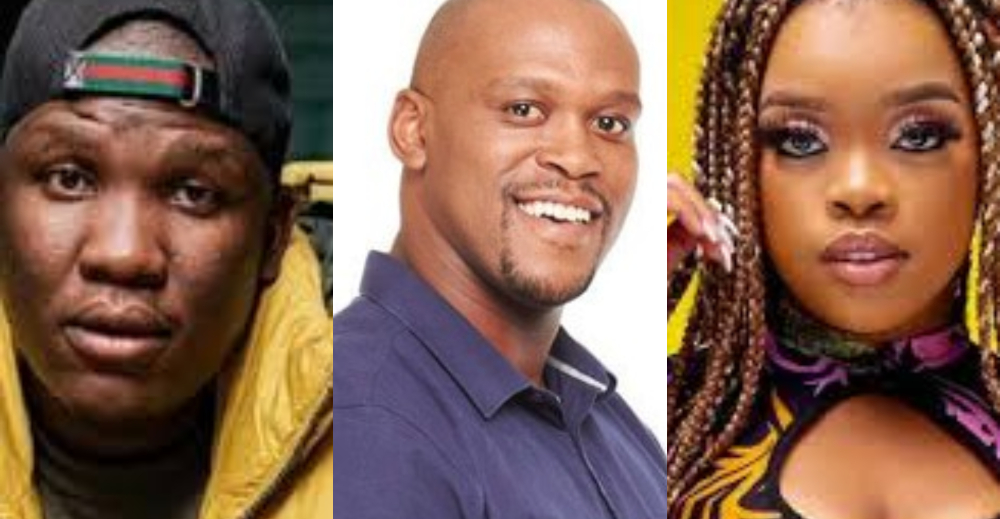
The song was released in 2021 and is credited to Thapelo Ndou, professionally known as Busta 929, and Hlengiwe Manyathi, professionally known as Boohle.
According to court papers cited in earlier reporting, Mokima Music and Publishing says it obtained rights to administer the artists’ compositions through agreements concluded in 2021.
Mokima says it entered into a composer administration agreement with Manyathi in May 2021 and also entered into arrangements involving Ndou and his company, Thupa Industry.
The music company consequently maintains that it owns, or alternatively has exclusive control over, the copyright in “Ngixolele”.
That ownership claim is at the heart of the case.
Black Brain, however, disputes that Mokima was the rights holder it needed to approach.
The song lands on The Black Door
When The Black Door premiered on e.tv in April 2022, “Ngixolele” became its opening theme.
The series, produced by Black Brain Pictures and created by Mandla N and Mpumelelo Nhlapo, ran for 275 episodes before ending in 2023.
The song therefore became closely associated with the drama, playing a prominent role in the programme’s opening sequence.
But behind the scenes, questions were developing over who had actually authorised Black Brain to use it.
Black Brain’s version is that it had obtained the necessary permission from Thupa Industry, Ndou’s company.
According to the company’s court papers, it entered into a licence agreement with Thupa Industry on March 22 2022.
That agreement allegedly contained a warranty from Thupa that it owned the copyright.
Black Brain says it subsequently paid Ndou R75,000 for the use of the song.
The company also says Ndou supplied separate tracks for the song and publicly celebrated its inclusion in The Black Door.
Why Mokima says the bill is R11 million
Mokima takes a very different position.
The company says Black Brain should have approached it for a synchronisation licence to use the song as the show’s titular theme.
According to court papers, Mokima says it would have charged R40,000 for every episode.
With the song used across 275 episodes, that calculation produces a claim of R11 million.
Mokima therefore alleges that Black Brain infringed its copyright by using the song without its permission and is seeking R11 million in damages.
The company has maintained that it takes the protection of composers’ and copyright holders’ rights seriously.
Mokima Music and Publishing managing director Thuli Mvelase previously said the company was pleased with the court’s earlier victory and argued that ignorance about who owns a work cannot excuse unauthorised use.
“The matter is not yet finalised,” Mvelase said previously, adding that Mokima would continue with the litigation to ensure that the company and the composers it represents were properly compensated.
Black Brain’s defence
Black Brain has not denied using the song.
Instead, the production company has challenged Mokima’s ownership claim and argued that it believed it had obtained the necessary rights through Thupa Industry.
The company has also relied on a provision in the Copyright Act dealing with circumstances where a person was unaware that copyright subsisted in a work.
Black Brain’s argument was essentially that it should not be liable for damages if it genuinely did not know that the copyright belonged to Mokima.
Its court papers pointed to the R75,000 payment, the agreement with Thupa, the warranty that Thupa owned the copyright and Ndou’s involvement in supplying the music.
The company also raised the fact that Mokima only asserted its alleged rights after the series had already been broadcast.
According to Black Brain’s papers, its first demand from Mokima came on August 22 2023 – roughly 16 months after The Black Door began airing.
The latest court ruling
The latest setback came when Judge Brad Wanless considered Mokima’s challenge to that particular defence.
The judge found that Black Brain’s own version of events actually demonstrated that the company knew copyright existed in “Ngixolele”.
The dispute, the judge found, was about who owned the copyright – not whether copyright existed at all.
The judgment drew a distinction between believing that a song has no copyright and believing that someone else owns the copyright.
The court said Black Brain’s reliance on a licence and warranty from Thupa effectively acknowledged that copyright existed.
In the judge’s words, a belief that one has a licence or that another party owns copyright is based on the existence of copyright; it is not evidence of ignorance that copyright exists.
The court therefore rejected the attempt to rely on that defence.
What the ruling means
Importantly, the ruling does not mean Mokima has already won the full R11 million claim.
The underlying copyright dispute still has to be resolved.
What Black Brain has lost is a particular line of defence against potential damages.
The court ordered the company to amend its plea within 15 days.
If it fails to do so, the disputed defence will be treated as struck out.
Black Brain was also ordered to pay Mokima’s costs, including the costs of counsel.
From R75,000 to R11 million
The case has become a striking example of how expensive music rights can become when a song is used in television without the parties agreeing on who controls the relevant copyright.
Black Brain’s position is that it negotiated a once-off R75,000 payment for the song’s use across the show’s opening titles.
Mokima’s position is that a proper synchronisation agreement would have been calculated per episode at R40,000 – producing an R11 million bill.
That enormous gap is now at the centre of the legal battle.
For now, neither side has secured a final ruling on the full damages claim.
A major name in South African television
The dispute is particularly significant because of the reputation of Mandla N and Black Brain Pictures in the local television industry.
Mandla Ngcongwane has built Black Brain into one of South Africa’s prominent black-owned production companies, with projects including Lockdown, DiepCity, The Black Door and Isitha: The Enemy.
DiepCity became a major success and won eight South African Film and Television Awards in 2022, including Most Popular TV Soap/Telenovela and Best Achievement in Directing.
The copyright battle therefore places one of the country’s established production houses in a difficult position over a relatively straightforward issue in television production – securing and verifying music rights before a song is used.
For Mandla N and Black Brain, the next stage will be to amend their court papers and continue fighting Mokima’s claim.
For Mokima, the latest ruling strengthens its argument that knowing copyright exists is different from knowing exactly who controls it.
And with R11 million still on the table, the “Ngixolele” dispute is far from over.
