
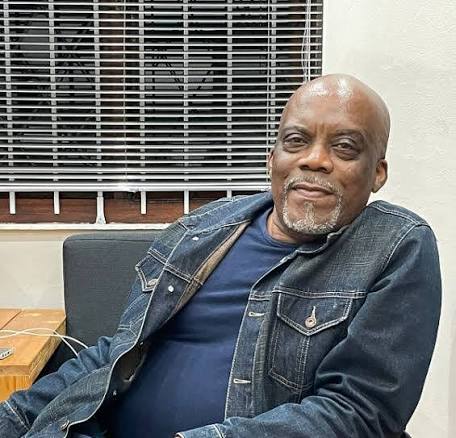
The academic career of former University of Fort Hare professor Edwin Ijeoma has come under renewed scrutiny after a Special Investigating Unit investigation found that he obtained admission to doctoral studies using a questionable master’s qualification from an institution that was not accredited to award degrees.
The revelations form part of a wider investigation into alleged corruption and academic fraud at the University of Fort Hare, where Ijeoma held senior positions and was involved in the admission and supervision of postgraduate students.
The SIU has now detailed its findings as it investigates irregular qualifications, admissions and the awarding of degrees at the university.
The fake qualification that opened the door
According to forensic investigations previously conducted into Ijeoma’s academic history, he claimed to hold a Master of Business Administration in Marketing from Kensington University in Honolulu, Hawaii.
The investigation found that Kensington University had never been accredited as a degree-conferring institution in the United States.
The university had a long history of regulatory problems. Its application to operate as a degree-granting institution had been rejected, with subsequent legal proceedings upholding that decision.
Kensington University was eventually shut down by US authorities in 2003 for operating without accreditation.
Despite questions surrounding the institution, Ijeoma used the qualification when applying for doctoral studies at the University of Pretoria in 1999.
A forensic report found that he was subsequently admitted and ultimately received a PhD.
The forensic investigation concluded that Ijeoma had been conferred with a PhD after securing admission using the questionable qualification.
How the qualification was uncovered
The issue did not initially emerge from a routine academic verification process.
Instead, scrutiny of Ijeoma’s qualifications intensified after allegations of irregular postgraduate admissions and registrations at Fort Hare surfaced.
The university launched investigations into allegations involving students who had been admitted or supervised by Ijeoma. The matter eventually resulted in criminal complaints and the involvement of the SIU.
Allegations of improper awarding of degrees surfaced in 2022, when Fort Hare laid a criminal complaint against Ijeoma over the alleged irregular admission and registration of two students, including Eastern Cape Premier Oscar Mabuyane, whom he supervised.
Ijeoma was also accused of irregularly registering former Eastern Cape health MEC Sindiswa Gomba for an honours degree in public administration despite allegations that she did not possess the necessary undergraduate qualification.
The investigation into those allegations ultimately opened a much wider examination of Ijeoma’s own academic credentials.
The Kensington University problem
The forensic investigation found that Kensington University was not an accredited degree-awarding institution.
According to reporting on the forensic findings, the university had operated in California before establishing a presence in Hawaii. Its attempts to secure authority to issue degrees were rejected by US authorities.
The University of Pretoria has said that when Ijeoma applied for doctoral studies in 1999, its admission rules did not require candidates to provide a South African Qualifications Authority evaluation certificate.
Instead, applicants were required to submit their academic transcript, degree certificate and other documents required under the rules at the time.
The university therefore said that, based on the requirements then in place, Ijeoma met the formal admission requirements.
A university spokesperson also pointed out that Kensington University was still operating when Ijeoma applied and that it was only shut down several years later.
From student to powerful academic
Ijeoma, who was born in Nigeria, came to South Africa in the 1990s and began his academic career at the University of Pretoria.
He eventually rose through the academic ranks and became a professor of public administration at Fort Hare.
At the university he occupied senior positions, including heading the public administration faculty.
His position gave him significant influence over postgraduate students, academic registrations and research supervision.
That authority is now central to the investigation into how students were allegedly admitted and progressed through postgraduate programmes.
The Mabuyane connection
Ijeoma’s name became particularly prominent in allegations surrounding the academic qualifications of Eastern Cape Premier Oscar Mabuyane.
A forensic investigation alleged that Ijeoma assisted Mabuyane with his postgraduate studies at Fort Hare.
Mabuyane has denied wrongdoing and has challenged allegations concerning his qualifications.
Court documents showed that the SIU was investigating allegations that Mabuyane had fraudulently submitted a research proposal for a master’s degree, allegedly with assistance from Ijeoma. Mabuyane has maintained that he did the work himself and disputed the allegations against him.
The investigation also raised allegations that Ijeoma and people working around him assisted students with research proposals and other academic work.
A wider academic fraud investigation
The allegations against Ijeoma are not limited to his own qualification.
The SIU’s investigation has expanded into the way qualifications were awarded at Fort Hare and the role played by university officials in allegedly facilitating irregular admissions.
The unit has been examining cases involving students who allegedly did not meet admission requirements but were nevertheless registered for postgraduate programmes.
The investigation has placed the integrity of university qualifications under intense scrutiny and raised questions about how academic institutions verify qualifications before allowing people to enter advanced degree programmes.
Ijeoma’s academic empire begins to unravel
The controversy surrounding Ijeoma eventually resulted in his suspension from Fort Hare.
In October 2020, the university suspended him on a precautionary basis following allegations involving the irregular enrolment of students.
The subsequent investigations painted a picture of an academic system in which admission requirements, supervision and postgraduate progression were allegedly manipulated.
The discovery that Ijeoma himself had relied on a master’s qualification from a university that was not accredited added another extraordinary dimension to the scandal.
It meant that questions were no longer only being asked about the students he allegedly helped through the system, but about the academic credentials of the professor who had been supervising them.
The questions now facing universities
The Ijeoma case has exposed the dangers of relying solely on documents presented by applicants when verifying academic qualifications.
It also raises questions about how a qualification from a disputed foreign institution was accepted as part of the pathway to a doctoral degree and how an academic who later became a professor was able to build a career around qualifications that subsequently came under serious scrutiny.
The University of Pretoria has stressed that its admission decision must be assessed against the rules that existed at the time Ijeoma applied.
But the SIU investigation has brought the issue back into the spotlight as part of a much larger examination of alleged academic corruption at Fort Hare.
The case is therefore about more than one professor or one questionable degree. It has become a test of the safeguards South African universities have in place to protect the credibility of academic qualifications and prevent fraudulent credentials from entering the higher education system.
