

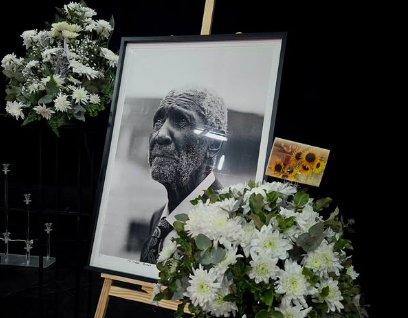
South Africa’s creative industry is mourning the death of veteran actor, playwright, poet, drama teacher and cultural activist Solomon “Sol” Rachilo, affectionately known as Bra Sol, whose life and work spanned decades of the country’s turbulent history and artistic evolution.
The Market Theatre Foundation on 25 August 2026, host a memorial service to honour the life, legacy and memory of its beloved friend at the John Kani Theatre, 138 Lilian Ngoyi Street, Newtown, Johannesburg. The service is scheduled to take place from 11am to 3pm.
Rachilo died on 16 August 2026, with tributes describing him as one of the country’s cultural elders and a “living archive” of Soweto’s history. While reports have differed on his age at the time of his death, there is broad agreement that his career stretched across several generations of South African theatre, film, literature and community arts.
A life dedicated to the arts and his people
Born in Pietermaritzburg, Rachilo spent much of his life in Soweto and became one of the enduring figures of South African performance.
His journey into theatre began in the 1950s, when he joined a generation of pioneering Black artists creating and performing under the harsh restrictions of apartheid. His professional stage career included landmark productions such as No-Good Friday, Sponono, Sizwe Bansi Is Dead and Maishe Maponya’s Gangsters.
Rachilo’s contribution, however, was never confined to acting. He was also a playwright and creator whose work included Three in Number, The Township Housewife and Grounded in Mshenguville. His writing and performances reflected township life, social realities and the political struggles experienced by ordinary South Africans.
His work also extended to film and television, with appearances in productions including Joe Bullet, Bullet on the Run, Charlie Steel, Game for Vultures and the SABC drama Lisenethini, where he played Capone. He also appeared in The No. 1 Ladies’ Detective Agency.
More than an actor
Perhaps one of Rachilo’s most significant contributions was his commitment to nurturing young artists.
Following the trauma and violence surrounding the 1976 Soweto uprising, Rachilo left social work and turned increasingly to the arts as a tool for healing and empowerment. In 1977, he founded the Children of Soweto Action Centre Drama Academy, which trained young people in drama, music, photography and fine arts and was widely recognised as a pioneering Black-owned drama institution during apartheid.
He also used poetry and literature to preserve memory. His work Nostalgic Waves from Soweto documented the events and aftermath of the 1976 uprising and became an important cultural record of a defining period in South African history.
Through his institutions and mentorship, Bra Sol helped shape generations of performers, writers and cultural workers, ensuring that his influence reached far beyond the productions in which he appeared.
President honours a cultural giant
President Cyril Ramaphosa joined South Africans in mourning Rachilo, paying tribute to the veteran artist’s immense contribution to the country’s cultural heritage.
The President said Rachilo had lived a life dedicated to preserving and advancing South Africa’s stories and artistic traditions, recognising his role as an actor, playwright, poet and mentor whose work helped shape the country’s cultural landscape.
His tribute echoed the sentiments expressed by the broader arts community, which has remembered Rachilo as a link between generations and a witness to some of the most important moments in South Africa’s modern history.
“Sol Rachilo’s contribution to the arts and culture of our nation was immense. Through his work as an actor, poet, playwright and cultural activist, he helped to tell the story of our people and preserve the rich heritage of our nation. His legacy will continue to inspire generations of artists and South Africans.”
The Department of Sport, Arts and Culture and Minister Gayton McKenzie also paid tribute to Rachilo, with McKenzie describing him as “a living archive of Soweto’s history” and “a mentor to countless young artists”. The minister said Rachilo’s work and the institutions he established would continue inspiring South Africans long after his death.
A legacy that will outlive the man
The Market Theatre Foundation described Bra Sol as part of a “golden generation” that helped shape South Africa’s unique artistic identity.
For those who knew his work, Rachilo was not simply an actor who appeared on stage and screen. He was a teacher, historian, storyteller and cultural activist who used art to preserve memory, confront injustice and create opportunities for young people.
As South Africa says goodbye to Solomon “Sol” Rachilo, it is also saying farewell to one of the last great witnesses and makers of a cultural era whose stories were born in struggle but continue to shape the country’s identity.
His passing closes a remarkable chapter, but through his plays, poems, performances, writings and the generations of artists he mentored, Bra Sol’s voice will continue to speak.
