

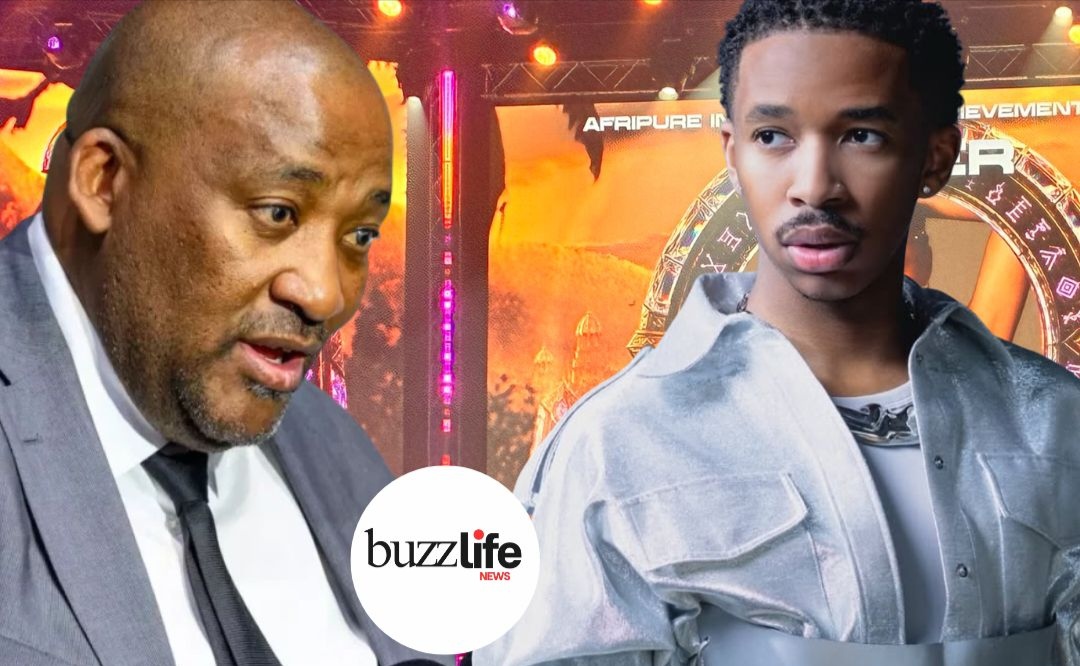
Lasizwe Dambuza has called on Sport, Arts and Culture Minister Gayton McKenzie to urgently address what he describes as a growing crisis in South Africa’s arts and entertainment industry, questioning why a country with an abundance of creative talent is struggling to produce and sustain world-class entertainment.
In a strongly worded social media post, the entertainer said the decline of major award shows, weakening entertainment value and what he sees as shrinking corporate investment should be treated as a warning sign for the industry. This comes after the dazzling evening at the South African Music Awards returned for the 32nd edition.
“Minister, we need to have a serious conversation about the state of South Africa’s arts and entertainment industry. What is happening? Our award shows are declining. The entertainment value is declining. Corporate investment seems to be disappearing,” Dambuza wrote.
His comments come at a time when South Africa’s creative industries are facing a number of structural and financial challenges, from questions around government funding and governance to difficulties confronting film and television producers and broadcasters.
The National Arts Council’s 2026 funding process, for example, highlighted the enormous demand for support from artists and cultural organisations. In one funding round covering craft, dance, literature and visual arts, 1 389 applications requested almost R388 million, while just over R13 million was available for allocation. The NAC acknowledged that the available budget was “significantly limited” compared with the demand.
The film and television sector has faced its own problems. Parliamentary discussions earlier this year heard concerns about outstanding film incentive claims, with Business Day reporting that approximately R1.2 billion in applications had remained unprocessed and that no claims had been paid for two years. Industry stakeholders warned that uncertainty was discouraging investment and contributing to job losses.
More recently, calls for intervention over the film incentive programme have intensified, with industry stakeholders arguing that South Africa risks losing international productions to competing markets that offer greater certainty around incentives and approvals.
For Dambuza, however, the problem extends beyond individual funding programmes. He believes South Africa has all the ingredients needed to build a globally competitive entertainment industry but is failing to convert its creative strength into sustainable commercial success.
“As someone in the entertainment industry who grew up watching the SAMAs, it’s genuinely disappointing to see where we are today,” he said. “With the amount of talent in this country, there is simply no reason our biggest productions shouldn’t look and feel world-class.”
South Africa has long positioned its creative industries as an important part of the country’s cultural identity and economic potential. Its musicians, actors, filmmakers, comedians, dancers, fashion designers, producers, technicians and digital creators have built audiences well beyond the country’s borders.
The challenge is turning that talent into an ecosystem where creatives can build sustainable careers, productions can attract investment and major cultural events can compete with international standards.
Dambuza, who has built a career across television, digital entertainment and content creation, questioned whether corporates still see entertainment as a worthwhile investment and whether existing funding mechanisms are effectively reaching the people producing the work.
“So where is the investment? Have corporates stopped believing in the industry? Is funding not reaching the people actually creating the work? Where is the money going?” he asked.
His concerns also come against a difficult environment for traditional broadcasters and media companies. The SABC, for instance, has been navigating financial pressure, with National Treasury projections putting the public broadcaster on course for a R41.3 million loss in the 2026/27 financial year, despite plans to increase revenue through advertising, sponsorships and digital platforms.
At the same time, the country’s creative economy continues to demonstrate that there is an audience and appetite for South African stories, music and personalities. The issue, increasingly, is whether the structures supporting those creators are strong enough to allow that demand to translate into long-term growth.
Dambuza stopped short of declaring the industry beyond repair, arguing instead that the current difficulties could become a catalyst for change.
“I don’t think we’ve hit rock bottom, but this should be our turning point,” he wrote.
He called on McKenzie to bring together government, broadcasters, corporates, artists, producers and other industry stakeholders to develop a coordinated strategy for rebuilding the sector.
“Bring government, broadcasters, corporates, artists, producers and creatives to the same table and figure out how we rebuild this industry,” Dambuza said.
He also proposed the establishment of what he called a “Malanga Commission of Inquiry into the entertainment industry”, arguing that a deeper investigation is needed to understand why the country’s considerable creative potential is not translating into an equally strong industry.
“Because the talent is here. The skills are here. The ideas are here. We need the industry to match them,” he said.
The post is likely to fuel an already-important conversation about who should carry responsibility for the future of South Africa’s creative economy. While government has a role in policy, funding and incentives, the sector also depends heavily on broadcasters, streaming platforms, brands, investors and private companies to create opportunities and commercial pathways for artists.
Dambuza’s central argument is therefore less about a lack of talent and more about a disconnect between South Africa’s creative potential and the infrastructure and investment required to support it.
