

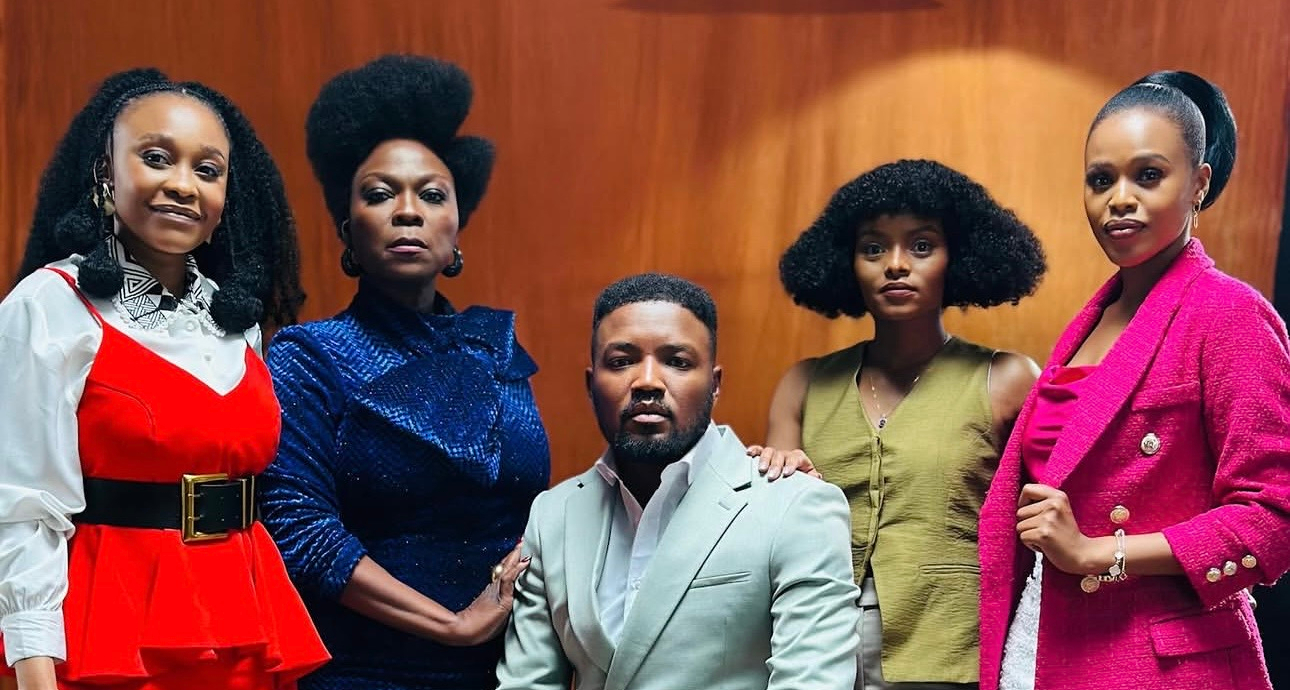
One of the standout features of Dear Sis Dolly, currently showing in cinemas across South Africa, is its striking recreation of the fashion and beauty that defined Sophiatown’s golden era and the iconic Drum magazine generation, transporting audiences back to a period where style was a powerful expression of identity, resilience and cultural pride.
From impeccably tailored dresses and elegant silhouettes to intricately styled African hairstyles, the film pays tribute to an era synonymous with sophistication, creativity and self-expression. The costumes and hair design bring to life the vibrant streets of Sophiatown, where fashion, music, journalism and political consciousness converged to shape a generation.
Leading the visual celebration is Didintle Khunou as Khethiwe, whose wardrobe reflects the confidence and elegance of young Black women navigating an exciting yet challenging chapter in South Africa’s history. S’thandiwe Kgoroge portrays “MM” Makaringe in sophisticated vintage ensembles that capture the grace, influence and determination of women who became pillars of their communities, while veteran actress Abigail Kubeka, who plays Koko, adds authenticity through costumes and styling that honour the wisdom and dignity of African matriarchs.
Director Twiggy Matiwana said the creative team viewed costume and hairstyling as much more than visual elements.
“Every costume and every hairstyle had to honour the women who lived through this remarkable period. We wanted audiences to feel as though they had stepped into the early Drum magazine era and the vibrant streets of Sophiatown, where fashion, music, journalism and culture came together to shape a generation. Authenticity was at the heart of every creative decision,” she said.
Matiwana explained that extensive research informed the film’s visual identity.
“The clothing does more than recreate a period; it reflects the confidence, ambition and resilience of the people who wore it. We wanted to celebrate African elegance while paying tribute to the women whose style became part of our country’s cultural heritage.”
Complementing the wardrobe is a carefully curated showcase of classic African hairstyles inspired by the 1950s and 1960s. From beautifully sculpted natural styles to elegant updos, the hair design honours generations of Black women who used fashion and grooming as powerful statements of beauty, identity and self-expression. Every fabric, accessory and hairstyle contributes to the film’s authenticity, immersing audiences in the rich cultural landscape of Sophiatown.
Executive producer Peter Vundla said the film’s meticulous attention to historical detail preserves an important chapter of South Africa’s cultural heritage for a new generation.
“The film’s attention to historical detail not only enhances its visual appeal but also preserves an important chapter of South African cultural history for a new generation of viewers. Through its costume and hair design, Dear Sis Dolly celebrates the enduring influence of African fashion while honouring the women whose style helped define an era.”
He added that the film revives a period associated with sophistication, confidence and cultural pride.
“The film revives an era synonymous with sophistication, confidence and cultural pride, using wardrobe and hairstyling to tell a story that extends beyond the script.”
More than a nostalgic journey, Dear Sis Dolly reminds audiences that fashion has long served as a powerful form of storytelling, reflecting the hopes, dreams and resilience of people determined to celebrate their identity despite the social and political challenges of their time.
Directed by Twiggy Matiwana and written by Makganwana Mokgalong, Dear Sis Dolly is a tribute to community, self-love and the enduring cultural legacy of Drum magazine’s iconic agony aunt column. Produced by Tshepiso Chikapa Phiri, Moroba Nkawe and Joel Chikapa Phiri of Known Associates Entertainment, with Peter Vundla serving as executive producer, the film stars Didintle Khunou, S’thandiwe Kgoroge, Dineo Langa, Natasha Thahane, Brighton Ngoma, Jerry Mofokeng wa Makhetha and Abigail Kubeka. It is currently showing at Ster-Kinekor, CineCentre and Nu Metro cinemas nationwide, as well as in Namibia, Zimbabwe and Zambia.
