

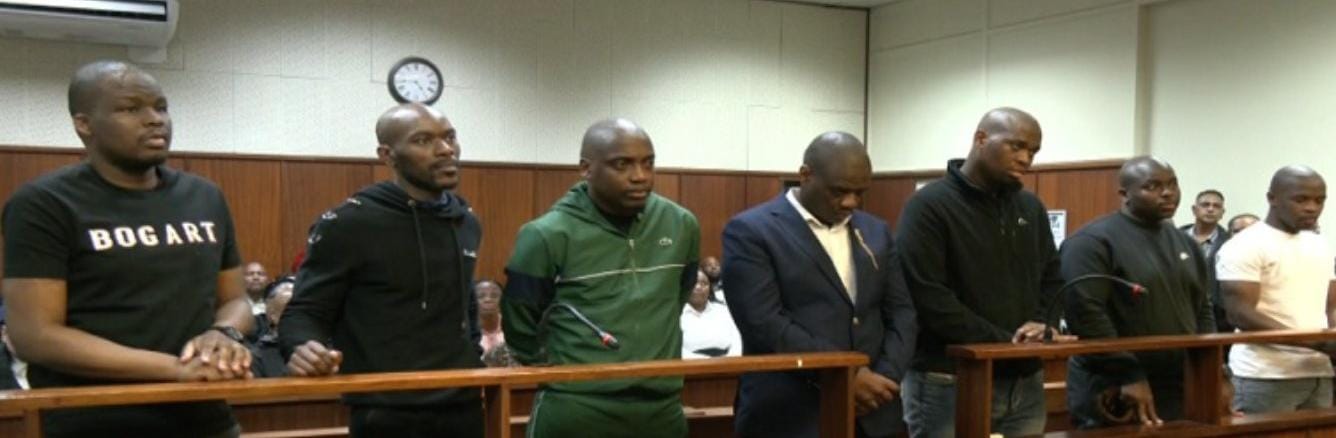
The murder trial into the deaths of rapper Kiernan “AKA” Forbes and chef Tebello “Tibz” Motsoane continued in the Durban High Court on Tuesday, with proceedings dominated by an application concerning the separation of charges against one of the accused.
The case, which began on Monday, is being heard more than three years after Forbes and Motsoane were shot dead on Florida Road in Durban on 10 February 2023.
The court has placed strict restrictions on what journalists can publish about the proceedings, particularly when it comes to witnesses and their evidence.
As the trial continues today, Wednesday, 7 October, the court is expected to move forward with the next stage of the proceedings following Tuesday’s ruling.
Court separates additional charges
One of the accused faces additional charges arising from a separate 2022 matter.
On Tuesday, the court heard an application by the defence seeking to have those charges separated from the main AKA and Tibz murder trial.
The State opposed the application, arguing that there were links between the two matters, including evidence relating to a firearm and witnesses.
The defence, however, argued that keeping the matters together could prejudice the accused and unnecessarily complicate and prolong the trial.
Judge Nomfundo Sipunzi ultimately granted the application.
The additional charges will therefore be dealt with separately, while the accused remains part of the main case concerning the deaths of Forbes and Motsoane.
The ruling was one of the key developments during the second day of the trial and clears the way for the main proceedings to continue.
What the State alleges
Forbes and Motsoane were shot dead shortly after leaving a restaurant on Florida Road on the evening of 10 February 2023.
The State alleges that the killings were planned.
The seven accused face charges in connection with the deaths, including murder, attempted murder, conspiracy to commit murder and firearm-related offences.
All seven have pleaded not guilty.
The allegations against them have not been tested in full through the evidence and they remain presumed innocent unless convicted.
Strict restrictions on witness reporting
One of the most significant aspects of the trial is the court’s directive governing media coverage.
Journalists covering the proceedings are prohibited from identifying witnesses or publishing or broadcasting what witnesses say while giving evidence.
The media are also prohibited from publishing or broadcasting exhibits handed in during the trial unless the court gives permission.
The restrictions do not amount to a complete ban on media coverage.
Journalists can report on the pleas entered by the accused, the opening and closing of the State and defence cases, arguments presented by legal representatives, rulings and orders issued by the court and the eventual judgment.
The court has also permitted certain audio-visual coverage, subject to conditions designed to ensure that cameras do not interfere with the proceedings.
Photographs of the courtroom may be taken before proceedings begin and after the court has adjourned.
Judge explains the need for the restrictions
Judge Sipunzi has emphasised the need to balance the principle of open justice with the constitutional rights of the accused and the protection of witnesses.
“The court recognises the importance of the principles of freedom of expression and open justice,” the judge said, while also pointing to the accused’s right to a fair trial and the interests of witnesses.
The directive can be amended or varied by the court if circumstances require it.
The restrictions mean that the public will not receive a conventional blow-by-blow account of witness testimony during the trial.
Instead, reporting will focus on the proceedings and information the court has expressly permitted the media to disclose.
SANEF questions the restrictions
The South African National Editors’ Forum has raised concerns about the scope of the restrictions.
SANEF has acknowledged the importance of protecting witnesses, particularly in a case involving serious organised crime allegations, but has questioned whether a blanket prohibition on reporting witness evidence is necessary.
The organisation has argued that protecting a witness’s identity does not necessarily mean that the substance of evidence given in an open court should also be hidden from the public.
The issue highlights the tension between two important principles – the public’s right to know what happens in court and the need to protect the integrity of criminal proceedings.
What happens today?
The trial continues at the Durban High Court today, Wednesday, 7 October.
Following Tuesday’s ruling on the separation application, attention is expected to return to the main case concerning the deaths of Forbes and Motsoane.
The proceedings are expected to continue with the State’s case and the next procedural steps before the court.
However, journalists reporting from court will remain bound by Judge Sipunzi’s media directive.
That means reporters can provide updates on court rulings, legal arguments and other authorised aspects of the proceedings, but cannot name witnesses or report what witnesses tell the court.
A trial more than three years after the killings
Forbes and Motsoane were killed in February 2023, sending shockwaves through South Africa’s entertainment industry.
AKA, one of the country’s most prominent rappers, was 35 when he was killed. Motsoane, a celebrated chef and entrepreneur who was also known as AKA’s close friend and associate, was 34.
Their deaths sparked a massive investigation and years of public speculation about who was responsible and why they were targeted.
The criminal trial now provides the formal legal process through which the State’s evidence will be tested.
But the court’s restrictions mean that much of what happens when witnesses take the stand will remain outside the immediate public reporting space.
For now, the central issue before the court is whether the State will ultimately be able to prove its case beyond reasonable doubt.
The trial’s first sitting is scheduled to continue until 6 November 2026, with further dates already set down for 2027.
As proceedings resume today, the court will continue navigating the difficult balance between transparency, witness protection and the constitutional right to a fair trial.
