

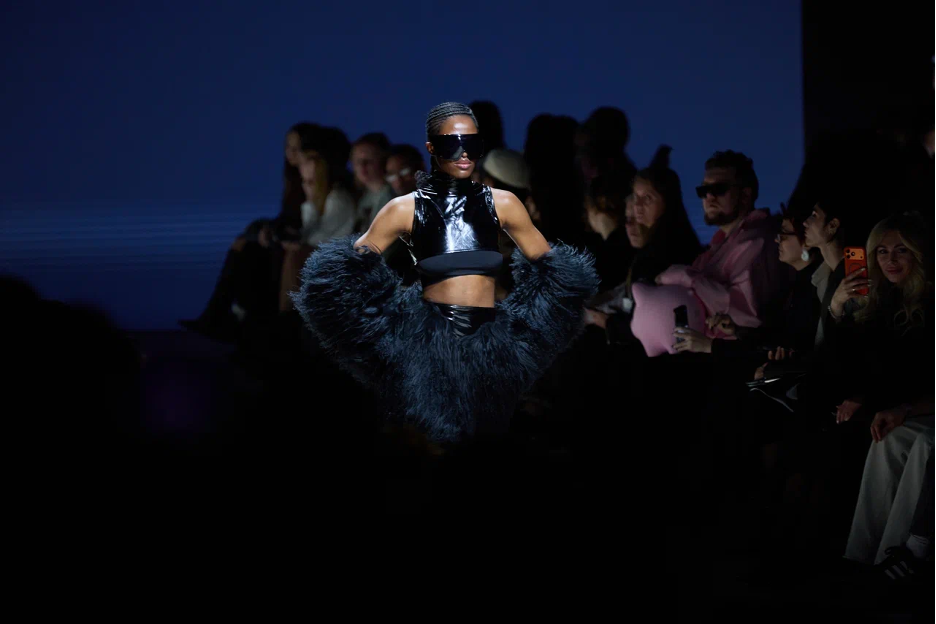
Moscow Fashion Week is set to bring together more than 200 fashion brands from around the world as the event continues the autumn calendar of major international fashion weeks from 26 September to 1 October 2026.
This season’s programme reflects the increasingly international nature of the fashion industry, with designers and brands from almost every continent expected to participate.
Among the international names on the programme are KikoRomeo from Kenya, Miguel Llopis from Spain, Limak by Kamil from Sri Lanka and Nohad Al Samarrie with The Black Crown Label from the UK.
Türkiye will be represented through a collective presentation by Gökhan Yavaş and Murat Aytulum, while designers from China, Nicaragua, the United States and several other countries will also take part.
Russian fashion will feature prominently, with established names including Gapanovich, Masterpeace, Unke, IgorGulyaev, Li Lab and Surovaya among the brands presenting their work.
A changing South African fashion industry
The international event comes at a time when South Africa’s fashion industry is experiencing significant growth, particularly among younger consumers who are increasingly drawn to local labels with distinctive identities.
South African designers have also been gaining recognition beyond the country’s borders, with fashion increasingly being used as a way to communicate culture, heritage and contemporary African identity.
But the industry continues to face structural challenges.
Low-cost imports, limited access to international buyers and a shortage of funding remain barriers for designers trying to scale their businesses. Even established labels can struggle to access the resources and international networks needed to move from local recognition to sustained global growth.
South Africa remains the largest fashion market in Southern Africa. Industry estimates put the country’s clothing and footwear retail market at about R235 billion in 2025, with the market projected to approach R317 billion by 2030.
That growth presents opportunities for local designers, but it also highlights the importance of developing stronger routes into international markets.
Why international access matters
For African fashion businesses, international fashion weeks can provide more than an opportunity to put a collection on a runway.
They can create opportunities to meet buyers, retailers, investors, media organisations and other industry professionals who can help emerging labels expand beyond their home markets.
Moscow Fashion Week has positioned itself as a platform offering several points of access to the fashion industry.
Alongside runway shows, the event includes a Showroom where participating brands can meet buyers, while its Pop-Up Shop gives designers an opportunity to reach consumers directly.
The programme also includes a Business Program and the World Fashion Shorts film festival, creating additional opportunities for exposure and industry engagement.
The organisers say the infrastructure is designed to introduce new names from different parts of the world while creating opportunities for their growth and promotion.
Stephen Manzini sees a shared fashion identity
Among those familiar with the Moscow platform is Stephen Manzini, founder and CEO of Soweto Fashion Week and president of the South African Fashion Association.
Manzini has attended Moscow Fashion Week on several occasions and sees similarities between the creative ambitions of Johannesburg and Moscow.
“I think both Johannesburg and Moscow share a strong sense of identity. Designers in both cities are driven by passion; they tell stories through fabric, culture, and emotion. There’s also this hunger to be seen, to redefine how the world perceives fashion from our regions. We both celebrate where we come from while reaching for the future,” Manzini said.
His comments point to a wider shift in the global fashion landscape, where cities outside the traditional fashion capitals of Paris, Milan, London and New York are increasingly seeking to establish their own identities and international networks.
For Johannesburg and other African fashion centres, that push is closely connected to the need for greater access to global buyers and commercial opportunities.
Botswana’s fashion and manufacturing opportunity
Mmantlha Sankoloba, CEO of the Botswana Exporters and Manufacturers Association, also sees international fashion platforms as an important route for brands operating in fast-growing markets.
“Participation in events such as Moscow Fashion Week provides an important platform to accelerate this journey. It offers designers the opportunity to showcase their collections to international buyers, retailers, media and investors while building relationships with global fashion stakeholders,” Sankoloba said.
The focus on exports and international connections is particularly relevant to African fashion businesses seeking to move beyond domestic markets.
For designers, securing international buyers can potentially open new sales channels while exposure to retailers, investors and industry professionals can create relationships that extend beyond a single fashion week.
BRICS+ Fashion Summit adds a business focus
Manzini and Sankoloba will also travel to Moscow for the BRICS+ Fashion Summit, the Fashion Business Forum of Fast-Growing Economies, taking place from 28 to 30 September 2026.
The summit will focus on practical business issues affecting the fashion industry, including entering new markets, attracting investment, sustainable production and the growing role of artificial intelligence.
The event is expected to bring together representatives from fashion organisations and industry bodies across Africa and other fast-growing economies.
African representatives include Mustafa Hassanali, chairman of Swahili Fashion Week in Tanzania; Emmanuel Muchindu Miyoba, director of Lusaka Fashion Weekend in Zambia; Anis Montacer, founder and CEO of Tunis Fashion Week in Tunisia; Rick Anderson, CEO, founder and director of Mauritius Fashion Festival Week; and Kalistu Ramos Mukoroli, director of MTC Windhoek Fashion Week in Namibia.
Mukoroli has participated in the programme for several years and says the summit’s value extends beyond the runway.
“What makes the Summit especially valuable is that it goes beyond runway presentations. It brings together designers, fashion-week organisers, retailers, policymakers, investors, educators, technology companies and other industry leaders to discuss the practical issues shaping the future of fashion,” he said.
Fashion as an economic opportunity
The participation of African fashion industry leaders comes as the continent’s designers increasingly look for ways to turn creative recognition into sustainable businesses.
For countries such as South Africa, Botswana, Tanzania, Zambia, Tunisia, Mauritius and Namibia, fashion sits at the intersection of creative industries, manufacturing, retail, exports and cultural identity.
The challenge is therefore not simply getting African designers onto international runways, but creating the commercial infrastructure that allows them to secure buyers, investment and long-term international distribution.
Moscow Fashion Week’s combination of runway presentations, business meetings, retail opportunities and industry discussions places that commercial question at the centre of its programme.
As the September event brings together brands from Africa, Europe, Asia, North America and elsewhere, the growing presence of African fashion representatives signals an industry increasingly focused on building connections beyond its traditional markets.
