
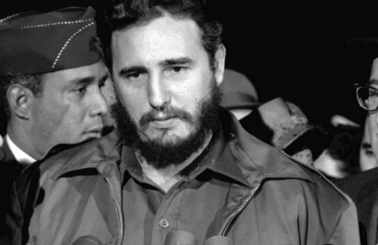
Cuba is marking the 100th anniversary of Fidel Castro’s birth with ceremonies, exhibitions and international gatherings celebrating the revolutionary leader, even as the country faces one of the most severe economic crises in its modern history.
Castro was born on August 13, 1926, in eastern Cuba. He studied law before becoming involved in politics and, in 1953, led an unsuccessful attack on the Moncada Barracks in an attempt to overthrow dictator Fulgencio Batista. After his imprisonment and exile in Mexico, Castro returned to Cuba with fellow revolutionaries and launched a guerrilla campaign. Batista was eventually overthrown in 1959, bringing Castro to power.
Castro transformed Cuba through sweeping agrarian reforms, a nationwide literacy campaign and the nationalisation of private businesses. His government aligned itself with the Soviet Union and became a major force in Cold War politics, while Castro emerged as an influential symbol of anti-colonial and revolutionary movements around the world. His rule also drew fierce criticism over political repression, restrictions on freedoms and the Communist Party’s monopoly on political power.
He governed Cuba for nearly five decades before handing the presidency to his younger brother, Raúl Castro, in 2008. Fidel Castro died in 2016, but his influence remains deeply embedded in the country’s political identity.
For the centenary, more than 1,500 activists and representatives from more than 60 countries travelled to Cuba for events dedicated to Castro’s legacy. Havana has hosted book fairs, exhibitions, concerts and political gatherings, while images and slogans associated with the former leader remain visible across the capital.
Cuban President Miguel Díaz-Canel has presented Castro as more than a figure of the past, arguing that his ideas remain relevant as the country confronts its current difficulties.
“Fidel’s legacy speaks to us today with greater force than ever,” Díaz-Canel said at the opening of an international conference on Castro’s legacy. He added that Castro should be remembered not only as a historical figure but “as a guide for overcoming the challenges before us today, in the real Cuba of 2026.”
Those challenges are severe. Cuba is experiencing prolonged power outages, with blackouts exceeding 20 hours a day in many provinces. The electricity crisis has disrupted food production, transportation and tourism, while shortages of fuel and medicine have added to the pressure on ordinary households. The national power grid suffered three nationwide failures in July alone.
The crisis has been compounded by worsening relations with the United States. Washington imposed an oil embargo on Cuba in January and has tightened sanctions, measures Havana says are designed to cripple the country’s finances and operations. The United States argues that its policies are intended to pressure the Cuban government to make political and economic changes.
At the same time, Cuba has been forced to reconsider aspects of the economic model associated with Castro. In June, the government approved 176 measures aimed at opening the socialist economy to greater private and foreign investment. The reforms represent a significant shift for a system built around extensive state control.
The centenary has therefore brought an uncomfortable question back into focus: what does Castro’s legacy mean for Cuba today? For some older Cubans, the worsening crisis has revived nostalgia for the certainty they associate with his leadership. Others, particularly critics of the revolution, argue that the political and economic system he created contributed directly to the problems the country now faces. Younger Cubans, meanwhile, are increasingly removed from the era in which Castro personally ruled the island.
A century after his birth, Fidel Castro remains impossible to separate from Cuba’s national story. But as the island struggles with blackouts, shortages, economic decline and political uncertainty, the centenary is also forcing Cubans to confront the distance between the revolutionary promise of Castro’s era and the difficult reality of Cuba in 2026.
