

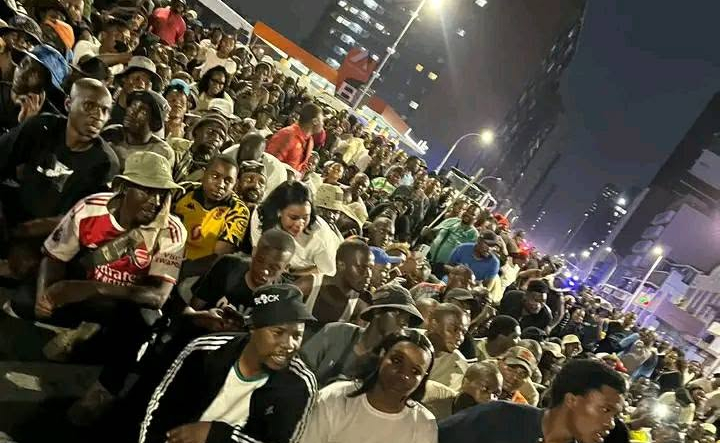
South Africa is facing renewed anti-immigration tensions after protests in Johannesburg, Soweto and Durban turned violent, leaving at least 24 vehicles burned, foreign-owned shops looted and several people arrested.
The unrest on Thursday, 8 October 2026, followed growing opposition to the processing of asylum applications after a Constitutional Court ruling on the rights of asylum seekers. Police and government officials have warned that demonstrations against immigration cannot be used as a justification for violence, intimidation or the destruction of property.
By Friday, 9 October, police and other law enforcement officers had increased their presence in affected areas, including Soweto, while further protests were reported in Johannesburg’s central business district and Durban. The Department of Home Affairs also withdrew a directive connected to the processing of asylum applications, citing operational pressures and public safety concerns.
Seven arrests reported in Durban and Johannesburg
Three foreign nationals were arrested in Durban following violence linked to allegations that a foreign national had assaulted a South African protester. Police said the incident contributed to clashes in which vehicles were set alight and businesses were looted.
In Johannesburg, Gauteng police confirmed four arrests following anti-immigration protests in the CBD on Friday. The suspects were allegedly among those leading the demonstration and encouraging criminal conduct. Police said charges included incitement to violence.
Gauteng police commissioner Lieutenant General Tommy Mthombeni confirmed the four arrests, warning that those involved in criminal acts would be held accountable even when participating in large crowds.
The seven arrests were reported in connection with separate incidents in Durban and Johannesburg. Authorities have not established in the available reports that these constitute a single nationwide arrest total for the latest unrest.
Police condemn violence as security is reinforced
Acting National Police Commissioner Lieutenant General Puleng Dimpane issued a strong warning after the violence in Soweto and Durban, saying police would pursue those responsible for arson, attacks and damage to property.
In a statement published by the South African Police Service on 8 October, Dimpane said: “The right to raise concerns and to protest does not give anyone the right to commit crime.”
She said those responsible for the destruction would be identified, investigated and arrested where sufficient evidence existed.
At least 10 vehicles were torched in Soweto and 14 in Durban, according to police. In Soweto, the violence occurred near the Home Affairs office in Orlando West. Reports indicated that the unrest followed allegations of gunfire directed at protesters, although the available accounts did not establish who allegedly fired the shots.
Police used public-order measures, including rubber bullets, to disperse crowds. In Durban, officers also deployed tear gas and stun grenades as tensions continued on Friday.
Why the protests erupted
The immediate trigger was a Constitutional Court ruling delivered on 7 July 2026 concerning access to South Africa’s asylum system.
The ruling found certain provisions of the law governing refugees unconstitutional because they prevented some people from accessing the asylum process on procedural grounds, including the circumstances under which they entered the country.
The decision does not mean that every undocumented foreign national automatically qualifies for asylum, refugee status or permanent residence. Instead, it addresses access to the process through which asylum claims must be considered.
The ruling prompted renewed debate over border control, immigration enforcement and the management of refugee reception offices. The government reported that the implementation of the judgment led to a surge in applications that placed pressure on facilities and raised concerns about officials’ safety and public order.
Home Affairs withdraws asylum directive
On Friday, 9 October, the Department of Home Affairs withdrew a directive that had been introduced to facilitate the processing of asylum applications following the court ruling.
According to Reuters, the department said the implementation had overwhelmed refugee reception offices within days, put officials at risk and created concerns about public safety and order.
The withdrawal of the directive does not reverse the Constitutional Court’s judgment. The legal implications of the ruling remain, and the government will have to address how the asylum system operates within the framework established by the court.
The government has also warned against misinformation about the judgment, particularly claims that it grants undocumented migrants automatic legal status.
Its stated approach includes strengthening border management, tackling human smuggling, conducting immigration enforcement operations and accelerating the deportation of people who do not qualify to remain in the country.
Government warns against misinformation and xenophobia
The unrest comes amid a broader wave of anti-immigration mobilisation in South Africa, where some groups have demanded the removal of undocumented foreign nationals.
Government officials have acknowledged public concerns about irregular migration while maintaining that immigration enforcement must take place within the law. The authorities have also cautioned that false or misleading information about the asylum ruling can fuel tensions.
Claims that migrants are responsible for unemployment, crime and pressure on public services have featured prominently in anti-immigration campaigns. However, these broad claims should not be treated as established facts without supporting evidence.
South Africa continues to face high unemployment and pressure on public services, but attacks on foreign nationals and businesses do not resolve those structural problems.
The latest unrest also follows protests earlier in 2026 that led tens of thousands of foreign nationals to leave South Africa, according to international reporting.
Police say the situation has stabilised
By Friday, police reported that the situation in Soweto and Durban had stabilised following the deployment of additional officers. However, authorities remained on alert as demonstrations continued in other areas, including Johannesburg’s CBD.
The latest arrests signal an effort to identify people allegedly involved in violence and incitement, rather than treating the demonstrations as a single criminal event. Investigations into the destruction of vehicles, looting and other reported offences remain important to establishing individual responsibility.
The central issue remains how South Africa enforces its immigration laws while respecting court judgments, protecting the rights of asylum seekers and ensuring public safety.
Police have made it clear that the right to protest does not extend to assault, arson, looting or intimidation.
