

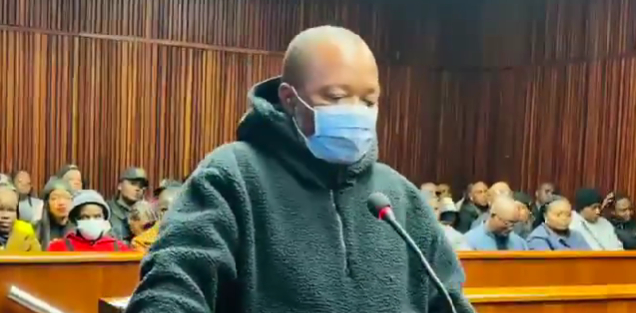
Tsebe Phillimon Moloto, better known to thousands of South Africans as “Mr Moloto”, is expected back in the Polokwane Magistrates’ Court on Tuesday, 22 September, as police continue investigating two allegations of malicious damage to property.
The 51-year-old businessman and founder of the Limpopo Anti-Drug, Gangsterism and Crime (LADGAC) Rehabilitation Centre was arrested in July following two separate incidents in Polokwane.
The allegations have placed a spotlight on a man who spent years building a public profile around rescuing people struggling with substance abuse and helping families deal with addiction.
Moloto has not been convicted of any offence. The allegations against him remain before the court and he is presumed innocent unless proven guilty.
From community activist to social-media phenomenon
Moloto became widely known through videos documenting his work with people battling drug addiction.
His trademark early-morning interventions became particularly popular on TikTok and other social media platforms. In the videos, Moloto and members of his team would arrive at homes to collect people whose families had requested assistance with getting them into rehabilitation.
Unlike traditional rehabilitation models that generally depend on an individual voluntarily entering treatment, LADGAC developed a more interventionist approach.
Families dealing with relatives who were refusing treatment, behaving aggressively or repeatedly returning to substance abuse would turn to the organisation for assistance.
Moloto’s growing online presence transformed him from a local rehabilitation figure into a recognisable personality in Limpopo and beyond.
His work has also attracted criticism and debate, particularly around the methods used to remove people from their homes and take them to rehabilitation. Reports have described cases where individuals did not consent to being taken away, although their parents or guardians had requested the intervention.
The LADGAC story and the people behind it
Moloto’s rise cannot be separated from LADGAC and the people who helped build the organisation.
One of those people is Oageng Makhura, who has publicly spoken about his previous association with the initiative.
A 2025 report by Gender Links described Moloto as having moved from being a concerned citizen into social entrepreneurship through his involvement with LADGAC. It also identified Makhura as a co-founder who played a role in the organisation’s development.
The relationship between the two men later deteriorated.
Makhura has spoken publicly about what he described as a fallout over the organisation, saying he had been involved in anti-drug work for decades and had helped build the initiative from the ground up.
He also questioned how people could receive community recognition without their full history being known.
However, those comments are part of Makhura’s account of the dispute and do not constitute findings by a court.
By 2024, reports indicated that the disagreement had become increasingly public, with the rehabilitation operation effectively splitting into separate interests.
The dispute provides important context to the events that would later place Moloto before the criminal courts.
The relationship at the centre of the criminal case
According to the National Prosecuting Authority, Moloto was previously romantically involved with the complainant in the case.
The two were also business partners at LADGAC.
The NPA says their personal and business relationships eventually broke down, after which the complainant established her own rehabilitation centre.
The complainant has been identified in reports as Molebogeng Rachidi, also referred to in some reports as Patricia “Lebo” Rachidi.
It is against this background that investigators are examining the two alleged arson incidents.
What allegedly happened on 28 June
The State’s case centres on events that allegedly happened on 28 June 2026.
According to the NPA, a Toyota Hilux belonging to Rachidi was parked at her parents’ home in Seshego Zone 3 when Moloto allegedly poured a flammable substance onto it and set it alight.
In a separate incident, prosecutors allege that a signboard advertising Rachidi’s new rehabilitation business was set alight in the Ladanna area of Polokwane.
The two incidents form the basis of the two counts of malicious damage to property against Moloto.
Other reports put the value of the Hilux at about R400 000, while the overall damage from the two incidents has been estimated at approximately R800 000.
The reports differ on the exact valuation of the vehicle, so the R800 000 figure should be understood as the broader estimated damage rather than a confirmed court finding.
The fire that allegedly put a family at risk
Details emerging after Moloto’s arrest indicated that the vehicle fire occurred while people were inside the nearby property.
According to Daily Sun, the flames from the burning vehicle spread towards part of a nearby house where seven people were sleeping.
Neighbours reportedly managed to contain the fire before anyone was injured.
Elizabeth Rachidi, the complainant’s mother, later described the fear caused by the incident.
“I was home when the incident occurred and there were seven of us in the house, we could have died if the fire wasn’t contained,” she said.
She added that Moloto’s release on bail did not mean the case was over and expressed hope that the legal process would continue.
Police investigation and Moloto’s arrest
Moloto was arrested on 13 July 2026 at his home in Welgelegen, Polokwane.
The arrest followed what police described as an intelligence-driven investigation into the two incidents.
Limpopo police spokesperson Colonel Malesela Ledwaba said investigators had linked Moloto to both incidents.
“Through intensive investigations and intelligence gathering, police positively linked the 51-year-old suspect to both incidents and obtained a warrant for his arrest. Investigations are ongoing,” Ledwaba said.
Reports also stated that police seized a Toyota Fortuner believed to have been used in the alleged offences.
Moloto initially appeared at the Seshego Magistrates’ Court in connection with one of the matters before the cases were consolidated and transferred to the Polokwane Magistrates’ Court.
The R50 000 bail and strict conditions
Moloto was granted R50 000 bail by the Polokwane Magistrates’ Court in July.
The State did not oppose bail, but strict conditions were imposed.
He was ordered to report to the Polokwane police station twice a week, on Mondays and Fridays.
He was also prohibited from contacting Rachidi or going to her home or workplace.
Moloto was further required to surrender his passport and could not reapply for one while the matter was ongoing. He was also required to inform the investigating officer if he intended to leave the province.
The court heard that he had no previous convictions or pending cases and no history of domestic violence.
The granting of bail was not a finding on the merits of the criminal allegations.
Makhura: “The court will decide”
Makhura was among those who appeared outside court when Moloto first faced the charges.
Despite the history of conflict between the two men, Makhura said the matter should ultimately be left to the legal process.
“Some battles belong to God. The court will decide. There is no problem if a person is granted bail,” Makhura said.
His comments came as the long-running dispute surrounding LADGAC became part of the wider public conversation around Moloto’s arrest.
More recently, Moloto himself appeared to signal that he wanted to move beyond the fallout with former associates.
In a message published in September, he said: “In life, accept when it’s over and move on. Even biological twins separate at some point in life.”
He added that no one owns another person, including within marriage.
A public image now under intense scrutiny
The criminal allegations are particularly significant because they involve a man whose public identity has been built around confronting crime, drugs and destructive behaviour.
For years, Moloto’s social-media videos showed him entering difficult family situations and helping relatives get loved ones into rehabilitation.
His approach made him popular with families who felt they had run out of options.
It also made him controversial.
The same tough interventionist image that helped turn him into a social-media personality has been questioned by critics who have raised concerns about the methods used to take people into rehabilitation.
At the same time, his supporters have credited him with helping people who were battling addiction and reconnecting families with relatives whose lives had become dominated by substance abuse.
The man behind “Mr Moloto”
Moloto’s story is therefore bigger than the criminal charges currently before the court.
He built a name around an issue affecting families across South Africa – drug addiction, gangsterism and the struggle to get people into treatment.
Through LADGAC, he became a recognisable figure in Limpopo, while his social-media presence expanded his reach nationally.
His journey from community activist and rehabilitation entrepreneur to a viral social-media personality brought him public recognition, but also placed his private and business disputes under an increasingly powerful public microscope.
Now, the same public figure who became known for knocking on doors before sunrise and telling people “wakey wakey” is having his own story examined inside a courtroom.
What happens next
The matter was postponed to 22 September 2026 to allow police to continue their investigations.
Moloto remains out on R50 000 bail and is subject to the conditions imposed by the court.
The court process will determine what evidence the State ultimately places before it and whether the allegations against Moloto can be proven.
For now, the central allegations remain just that – allegations.
Moloto has not been convicted, and the court has yet to make a finding on whether he was responsible for the two incidents.
