

Tongaat Hulett’s rescue enters critical phase as Robert Gumede’s Vision faces fresh legal challenge
Tongaat Hulett has avoided the immediate threat of liquidation, but the 134-year-old sugar producer remains locked in a complicated business rescue process that is now being shaped by a major deal involving businessman Robert Gumede’s Vision Sugar Group and the Industrial Development Corporation (IDC).
The latest developments show that Tongaat has moved a significant distance from the crisis that threatened to shut down its South African operations earlier this year. However, the company remains in business rescue and faces continued legal challenges over the restructuring and the proposed transfer of its business and assets to Vision.
Tongaat entered voluntary business rescue in October 2022 following the accounting scandal that wiped billions of rand from its value.
In February 2026, the situation became critical when the business rescue practitioners applied for provisional liquidation, saying the existing rescue plan had become unimplementable after key conditions were not met.
That liquidation application was ultimately withdrawn in June after Vision, the IDC and the business rescue practitioners reached a new agreement to keep the company operating.
Gumede’s role in the rescue
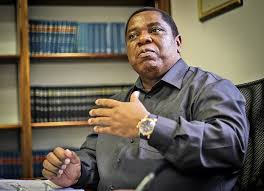
Gumede is not simply an outside investor who arrived after the crisis. He is one of the central figures in the Vision consortium that has been trying to acquire and restructure Tongaat for several years.
Vision, which includes Gumede and Zimbabwean businessman Rute Moyo, acquired the claims and security of Tongaat’s former banking creditors. Vision has said it acquired approximately R12 billion in secured claims from 13 banks, putting the consortium in a powerful position within the business rescue process.
Tongaat’s own court documents recorded that Vision held more than R11 billion in secured debt by March 2026.
That debt position is important because it effectively placed Vision at the centre of decisions about Tongaat’s future.
Rather than simply demanding repayment, Vision’s strategy was to convert its secured claims into equity and emerge as the controlling investor in a restructured Tongaat.
Gumede has publicly defended the strategy and argued that the objective has always been to save the business rather than liquidate it.
Speaking after the June agreement, Gumede said he was “heartened that the final negotiations and agreement to save the sugar industry” had been reached, describing the deal as an important step in protecting jobs and growers.
The IDC becomes a crucial partner
The other major player is the state-owned Industrial Development Corporation.
The June agreement changed the dynamics considerably. Instead of allowing Tongaat to collapse, the IDC agreed to support the restructuring and convert existing exposure into equity.
The government said the agreement was designed to safeguard approximately 250 000 jobs across the sugar value chain.
Employment and Labour Minister Nomakhosazana Meth described the intervention as providing “a clear and credible pathway towards stabilising Tongaat Hulett and securing the future of the sugar industry value chain”.
The Portfolio Committee on Trade, Industry and Competition also welcomed the agreement, saying it would preserve jobs and support thousands of workers, growers, suppliers and rural communities.
The IDC’s involvement has since become one of the most debated aspects of the rescue.
A recent Mail & Guardian analysis reported that the IDC has acquired an estimated 33% stake in Tongaat Hulett South Africa, together with strategic equity exposure across Vision Sugar’s operations in Zimbabwe, Mozambique and Botswana. The report said the IDC was converting about R4.5 billion in existing claims into equity rather than providing a new loan to Vision’s shareholders.
That distinction is significant.
It means the state development financier is effectively converting distressed exposure into an ownership position rather than simply writing another cheque to rescue Tongaat.
But Tongaat is still in business rescue
Despite the June breakthrough, Tongaat has not yet reached the end of the business rescue process.
The company’s official business rescue records show that it remains under the process and that July status reports were still being filed. The latest documents also include a notice to affected persons dated 27 August 2026.
The company’s website records that Tongaat and Tongaat Hulett Development entered business rescue on 27 October 2022.
The immediate liquidation threat has therefore been removed, but the broader restructuring still has to be completed before Tongaat can finally emerge from business rescue.
RGS is still fighting the Vision deal
One of the biggest complications is the continued legal challenge by RGS Group Holdings, a Mozambique-based business controlled by the Gulamo family.
RGS was previously a rival bidder for Tongaat and had submitted its own business rescue proposal. It withdrew that plan in January 2024, alleging that the rescue process was unfairly tilted towards Vision.
RGS has continued challenging aspects of the Vision transaction.
Tongaat’s latest official records list an RGS application for leave to appeal dated 20 August 2026, while also recording a Constitutional Court decision refusing Tongaat’s own application for leave to appeal in a separate matter.
The Constitutional Court’s August decision is particularly important because it relates to Tongaat’s obligations under the South African Sugar Industry Agreement. The court refused leave to appeal, leaving the earlier Supreme Court of Appeal position intact.
The ruling does not liquidate Tongaat, but it adds another legal and financial issue that the business rescue practitioners must navigate.
So where does Robert Gumede fit now?
Gumede’s position is best understood as that of a principal investor and key shareholder within the Vision consortium that is positioned to take control of the restructured Tongaat business.
He is not the government and he does not own Tongaat personally.
The structure involves Vision Sugar Group, its various partners and the IDC. Gumede’s Guma Group is part of the Vision structure, alongside Moyo and other investors. The June rescue agreement gave the consortium a pathway to convert the debt it acquired into equity and take the business forward with the IDC.
This is why Gumede has become one of the most recognisable figures in the Tongaat saga.
His involvement began as a bidder and creditor and evolved into a central role in the proposed ownership and turnaround of the company.
The rescue also appears to have strengthened his ambitions in the regional sugar industry. In August, reports emerged that Vision Sugar had approached Associated British Foods about potentially acquiring Illovo Sugar, which would represent a much larger play in Southern Africa’s sugar market.
A rescue – but with serious questions remaining
Tongaat’s survival represents a major turnaround from February, when its own business rescue practitioners argued that liquidation was unavoidable.
The government has emphasised the enormous economic consequences of failure. The Department of Trade, Industry and Competition previously warned that Tongaat’s collapse would have “far-reaching and devastating consequences” for the sugar sector, particularly in KwaZulu-Natal.
But the rescue is not simply a story of a company being saved by a wealthy businessman.
It is a complicated restructuring involving private investors, the IDC, former bank creditors, rival bidders, sugar growers, employees and ongoing court proceedings.
And while Vision has presented the transaction as a turnaround that converts distressed debt into productive ownership, the structure is still attracting scrutiny.
The Mail & Guardian reported this month that the IDC-Vision transaction deserves scrutiny, particularly because of the scale of the public institution’s exposure and the extent of Vision’s new regional sugar platform.
For now, the crucial fact is that Tongaat is still operating.
The liquidation threat that dominated the first half of 2026 has been pushed back, Vision remains at the centre of the proposed ownership structure, the IDC has become a significant equity partner, and Robert Gumede has emerged as one of the key private-sector figures behind the rescue.
But until the business rescue is formally concluded and the ownership transition is completed, Tongaat’s future remains a work in progress.
