

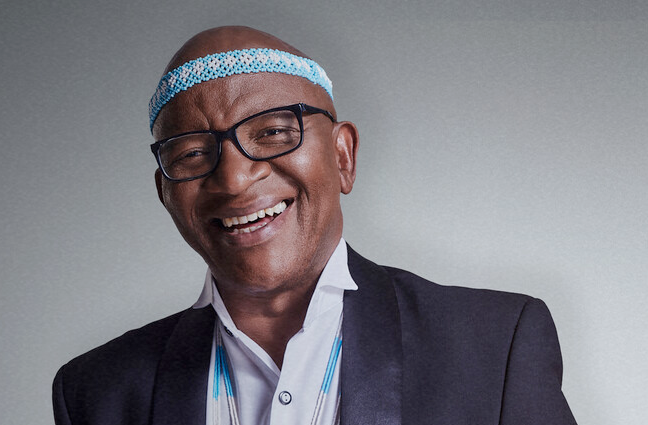
Grammy Award-winning South African composer and performer Lebohang “Lebo M” Morake’s legal battle with Zimbabwean comedian Learnmore Mwanyenyeka, better known as Learnmore Jonasi, has ended with a US federal court ordering Morake to pay the comedian US$39,560 (about R640,000) in attorneys’ fees.
The ruling is the latest development in a dispute that began with a joke about one of the most recognisable songs in The Lion King and escalated into a US$27 million (about R436.6 million) lawsuit.
How the legal battle started
The dispute centred on the famous opening chant from The Lion King’s “Circle of Life” – “Nants’ Ingonyama bagithi Baba”.
Jonasi discussed the chant during an appearance on the One54 Africa podcast, where he jokingly offered his own translation of the Zulu phrase.
His humorous version was: “Look, there’s a lion. Oh my God.”
The joke went viral and caught the attention of Morake, who is closely associated with the music of The Lion King.
Morake argued that Jonasi’s comments misrepresented the meaning and cultural significance of the chant.
According to the original lawsuit, Morake maintained that the phrase had a royal meaning and was linked to Zulu praise poetry.
Lebo M takes comedian to court
On March 16, 2026, Morake filed a lawsuit against Jonasi in the US District Court for the Central District of California. He sought US$27 million (about R436.6 million) in damages. The lawsuit included claims relating to alleged defamation, misleading representation, trade libel and interference with prospective economic advantage.
Morake’s case was that Jonasi had presented what was effectively a false translation as fact and that this damaged his reputation, his artistic legacy and the commercial interests connected to his work.
The case attracted international attention because of the personalities involved and the cultural significance of The Lion King.
Jonasi says: “I’m getting sued for telling a joke”
Jonasi strongly disputed the allegations and maintained that his comments were made as comedy. After being served with the lawsuit while performing at the Laugh Factory in Los Angeles, he publicly reacted to the case.
“I’m getting sued for $27 million and to make matters worse, I got served the lawsuit while I was performing,” Jonasi said.
He also said: “I can’t believe I’m getting sued for telling a joke.”
Jonasi argued that his intention was not to disrespect Morake or African culture, but to use comedy to comment on how African culture and language are sometimes understood and portrayed.
The comedian later apologised to anyone who had been offended while maintaining that his comments were part of a joke.
The case takes a legal turn
Jonasi responded to the lawsuit by filing an anti-SLAPP motion. California’s anti-SLAPP law is designed to protect people from lawsuits that seek to restrict constitutionally protected speech. Jonasi argued that his comments were protected by the First Amendment and that the lawsuit should therefore not proceed.
Morake later filed an amended complaint which shifted the focus of the dispute.
Among the allegations was that Jonasi had commercially used material connected to the dispute, including an “It’s a Lion” range of merchandise.
The lawsuit is dismissed
The two sides ultimately agreed to dismiss the case. The court dismissed the action without prejudice. That distinction is important. It meant the judge did not conduct a trial and did not make a final finding that Jonasi had defamed Morake or that Jonasi’s humorous translation was legally correct.
Morake subsequently stressed that the dismissal should not be interpreted as a court finding that he had lost the underlying dispute.
His legal team previously said the case ended through a mutual settlement and that there had been no ruling on the merits.
But Jonasi goes back to court over legal fees
Although the main lawsuit had been dismissed, Jonasi continued his legal fight over the costs he had incurred defending himself.
He asked the court to award him attorneys’ fees under California’s anti-SLAPP law.
In an August 28, 2026 order, US District Judge Josephine L. Staton ruled in Jonasi’s favour on that issue.
The court found that Jonasi had succeeded in achieving the objective of his anti-SLAPP motion.
The judgment states: “The Court thus concludes that Defendant succeeded in his objective and prevailed on his Anti-SLAPP Motion.”
The court therefore found that Jonasi was entitled to recover attorneys’ fees and costs.
Lebo M ordered to pay about R640 000
Jonasi’s lawyers initially sought US$45,935 in fees.
After reviewing the work performed and the rates charged, the court reduced the amount.
Jonasi was ultimately awarded US$39,560 (about R640,000) in attorneys’ fees.
The court also declined a request for an additional multiplier that could have increased the award.
The ruling noted that Jonasi had actually paid his lawyers substantially less than the amount ultimately awarded by the court. His lawyers had reportedly charged him about US$5,350 (about R86,500), reflecting a significant discount.
The court nevertheless based the statutory award on the reasonable value of the legal services provided.
What the court ruling actually means
The latest ruling does not mean that the court decided which translation of the Lion King chant is correct.
It also does not amount to a finding that Jonasi’s joke was an accurate translation of the Zulu phrase.
Instead, the August 28 ruling was specifically about whether Jonasi qualified as the prevailing party for purposes of California’s anti-SLAPP law and whether he was entitled to recover his legal fees.
The underlying lawsuit had already been dismissed without prejudice.
The court’s decision therefore dealt with the consequences of the anti-SLAPP proceedings rather than deciding the original cultural and linguistic dispute.
A costly ending to a very public dispute
The battle began as a comedian’s joke but quickly became a high-profile confrontation involving culture, comedy, free speech and artistic ownership.
For Morake, the chant is part of his celebrated contribution to The Lion King and his broader work in bringing African musical traditions to international audiences.
For Jonasi, the comments were part of his comedy and his broader commentary on the way Africa is represented and understood.
Morake’s original claim sought US$27 million (about R436.6 million), but the case was ultimately dismissed without a ruling on the merits.
The latest development leaves Jonasi with a court-ordered award of US$39,560 (about R640,000) in legal fees after the judge found that he prevailed in the anti-SLAPP proceedings.
For Morake, the legal battle has therefore ended without a court ruling on the original allegations – but with a significant legal bill attached to the fight.
