

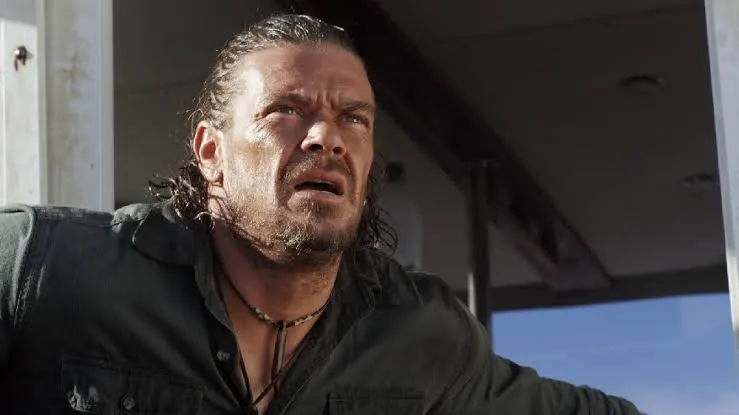
South African actor Brandon Auret has intensified criticism of Sports, Arts and Culture Minister Gayton McKenzie, telling him to “ship out” of government if he is unwilling to prioritise the country’s struggling creative sector.
Auret’s remarks came after McKenzie’s department spent R30.9 million on South Africa’s programme at the 2026 FIFA World Cup, which included taking government officials, football fans and 30 South African artists to the tournament as part of the country’s Ekhaya activation programme.
The actor accused McKenzie of focusing heavily on sport while actors, musicians and other creatives continue to battle unemployment, shrinking opportunities and inadequate government support.
“If you’re only interested in sport, then ship out of your government position,” Auret said, arguing that the minister has failed to give the arts the attention they deserve.
The criticism comes as the Democratic Alliance (DA) has lodged a formal complaint with the Public Protector, alleging that McKenzie breached the Executive Ethics Code through appointments linked to his Patriotic Alliance (PA) and through the department’s nearly R31 million FIFA World Cup programme.
The first part of the complaint concerns appointments to the 2025/26 Mzansi Golden Economy adjudication panel, which was tasked with recommending the allocation of almost R110 million in arts funding. According to the DA, three of the six panellists—Steve Motale, Vernon Vraagom and Francisco Tejada—were active members of the Patriotic Alliance when they were appointed, with Motale also serving as the party’s national spokesperson.
DA MP Leah Potgieter alleged that McKenzie personally determined the panel’s requirements before appointing active members of his own political party to oversee the distribution of public funds.
“This means that the Minister determined the rules, selected the panel and appointed active members of his own political party to decide how nearly R110 million would be distributed,” Potgieter said.
She further questioned the allocation of the funding, arguing that there was still no comprehensive public account of where the money had gone.
“The R110 million fund was established on paper to create opportunities for artists and grow the creative economy, but appears to have created opportunities for the Patriotic Alliance,” she said.
The DA’s complaint also targets the department’s World Cup expenditure, particularly the R7.9 million spent on official travel for an 18-member government delegation and McKenzie’s own travel costs of just over R1 million.
“While Gayton McKenzie spent R31 million on going to the World Cup, South African sporting federations are struggling to survive,” Potgieter said.
“While athletes hold fundraisers to buy plane tickets, this Minister presided over a R31 million World Cup bonanza.”
The party argues that the Public Protector should investigate what it describes as a pattern of political appointments, questionable public spending and an alleged failure to provide Parliament with complete records.
McKenzie has rejected the allegations, insisting the World Cup programme formed part of government’s strategy to market South Africa internationally and attract future investment, tourism and major sporting events.
“So if you are angry with me for R31 million at the World Cup, you’re going to kill me with a bill of Formula One,” McKenzie said.
“I’m busy bringing big events here. I’m ambitious. If you put me as Sports Minister and you don’t want me to be ambitious, then I’m not your guy.”
He added that showcasing South Africa on the global stage was a key part of his mandate.
“We have to sell our country. We have to showcase our country. That’s my job. That is what the President told me is my job.”
Earlier this week, McKenzie also released a detailed breakdown of the R30.9 million programme budget, dismissing claims that it was spent on personal travel. According to the department, R7.86 million covered official travel for the minister, his support staff, the Director-General and project team members, while R6.7 million funded the South Africa 2010 Legends Exhibition Match, R3.36 million went towards hospitality suites, R3.01 million covered match tickets and R10 million was spent on fan engagement, cultural activations and programme delivery involving 30 South African artists.
McKenzie said the delegation’s programme extended beyond attending football matches, including meetings with Mexican government officials, Formula One organisers, chambers of commerce and cultural institutions while promoting South Africa through the Ekhaya activation.
Against that backdrop, Auret’s comments have reignited debate over whether the Department of Sport, Arts and Culture has struck the right balance between investing in major sporting initiatives and supporting South Africa’s embattled arts and entertainment sector.
