

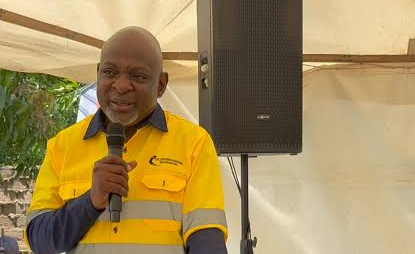
The Collen Mashawana Foundation, founded by businessman and philanthropist Collen Mashawana, is facing a liquidation application over an unpaid legal bill of R8,050, adding to the organisation’s growing legal troubles.
Nethavhani Attorneys has approached the High Court seeking an order to place the non-profit organisation under provisional liquidation, alleging that it is unable to meet its financial obligations.
According to court papers reported by Africa Daily, the law firm’s director, Khathutshelo Nethavhani, claims the foundation owes his firm R8,050 for legal services rendered while representing the organisation in a separate dispute with First National Bank (FNB).
Nethavhani says a letter of demand was served on the foundation on April 7, 2026. He alleges that Austin Mashawana, one of the foundation’s directors, acknowledged receiving the letter, but the outstanding amount was still not paid.
The attorney further claims that the foundation failed to provide security for the debt or make arrangements to settle it.
He is asking the court to place the organisation under provisional liquidation and issue a rule nisi calling on the foundation and other interested parties to explain why a final liquidation order should not be granted.
The application also seeks to have the matter brought to the attention of the South African Revenue Service (SARS), the Master of the High Court and known creditors.
The liquidation application is linked to an earlier legal dispute between the foundation and FNB over a R3 million housing project intended to provide homes for vulnerable South Africans.
In August 2026, Africa Daily reported that the bank had instituted legal action against the foundation, seeking to recover R1 million over four houses it alleged had not been completed despite the full donation being paid upfront.
According to the bank’s court papers, the donation agreement was concluded in May 2024, with the money intended to fund 12 houses for elderly people, persons with disabilities and child-headed households.
FNB alleged that only eight houses had been completed, leaving four outstanding at an estimated cost of R250,000 each.
The bank subsequently sought repayment of the R1 million, together with interest and legal costs.
Nethavhani Attorneys represented the foundation in that dispute, which is now at the centre of the separate claim for unpaid legal fees.
The latest development comes amid wider scrutiny of the foundation following investigations into its administration of an Expanded Public Works Programme (EPWP) contract with the Independent Development Trust (IDT).
In November 2025, there were reports on an investigations alleging that workers employed through the foundation’s R60 million EPWP programme had not received their full stipends and that signatures on payment documents had allegedly been falsified.
The investigation also raised questions about workers being deployed at properties belonging to the Mashawana family instead of public facilities.
The IDT subsequently confirmed that the foundation had withdrawn from the programme with effect from December 1, 2025, citing reputational considerations.
In a statement at the time, the IDT said it would continue its independent forensic review to verify the authenticity of documents submitted by the foundation and assess whether contractual obligations had been met.
The foundation has previously faced other legal and reputational challenges arising from the EPWP controversy. Mashawana also approached the Johannesburg High Court in August 2025 in an attempt to prevent further reporting on the matter. The application was struck off the roll.
In a separate labour dispute involving EPWP workers in the Free State, the Commission for Conciliation, Mediation and Arbitration (CCMA) dismissed the case in March 2026 after most of the applicants failed to attend their scheduled arbitration hearing.
The foundation’s head of communications, Penny Lebyane, welcomed that ruling, saying: “We are relieved by the judgment and pleased the matter has been clarified.”
In the latest liquidation application, the court must still consider the application and determine whether the requested relief should be granted.
