

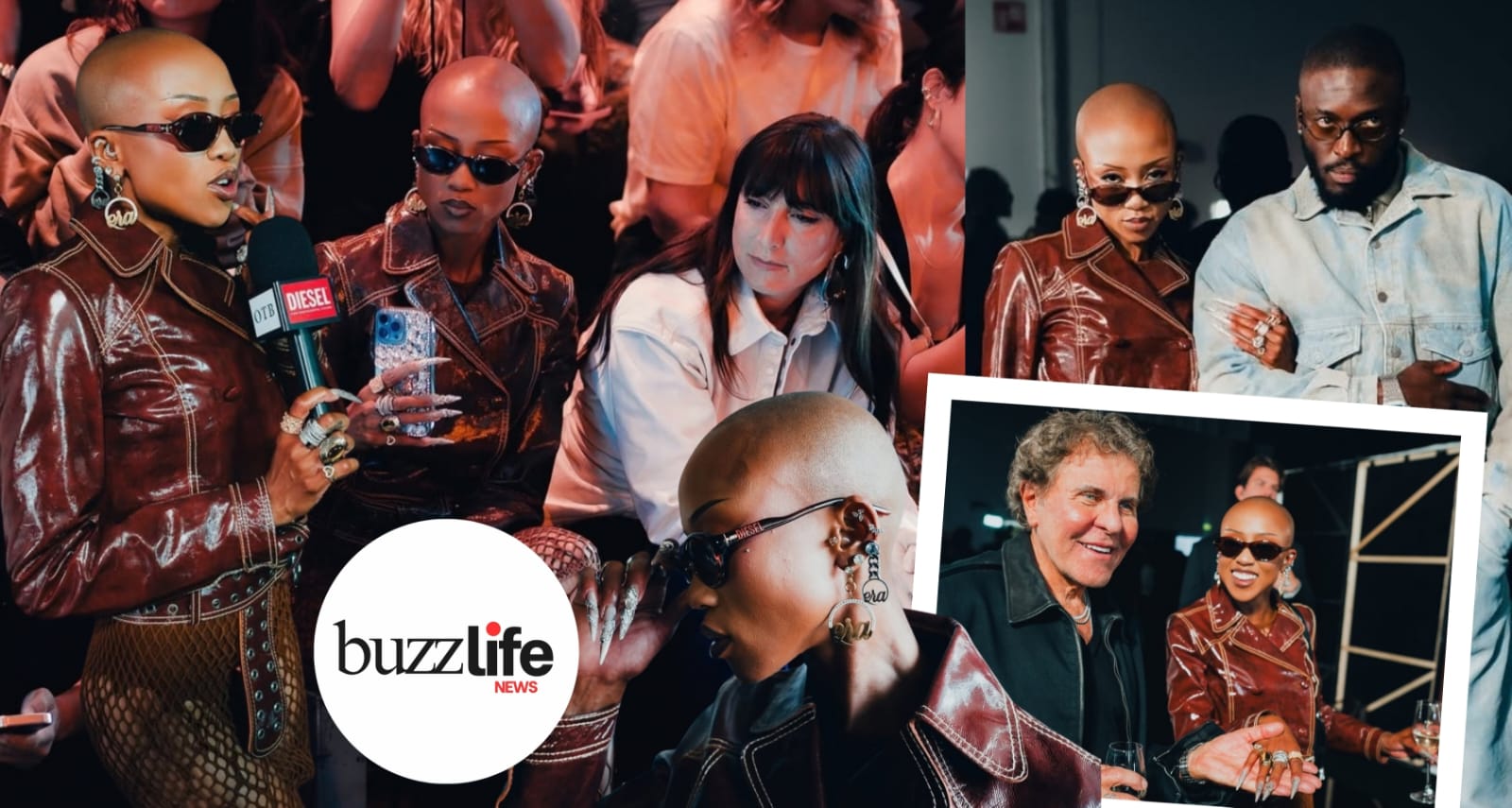
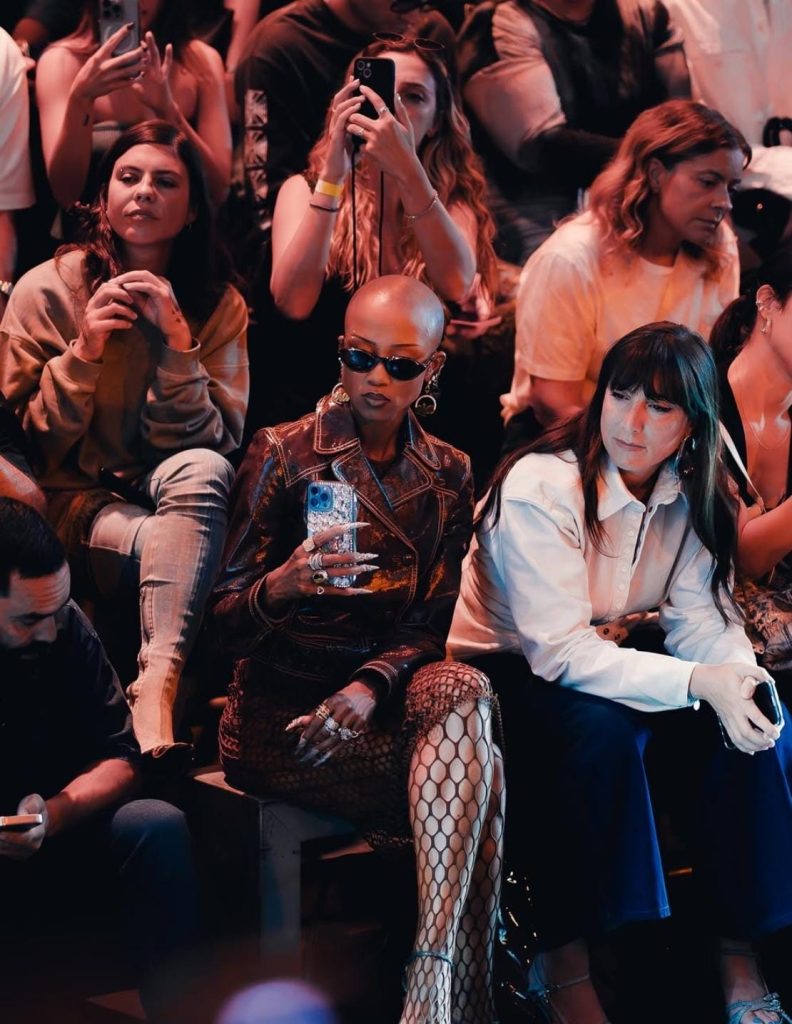
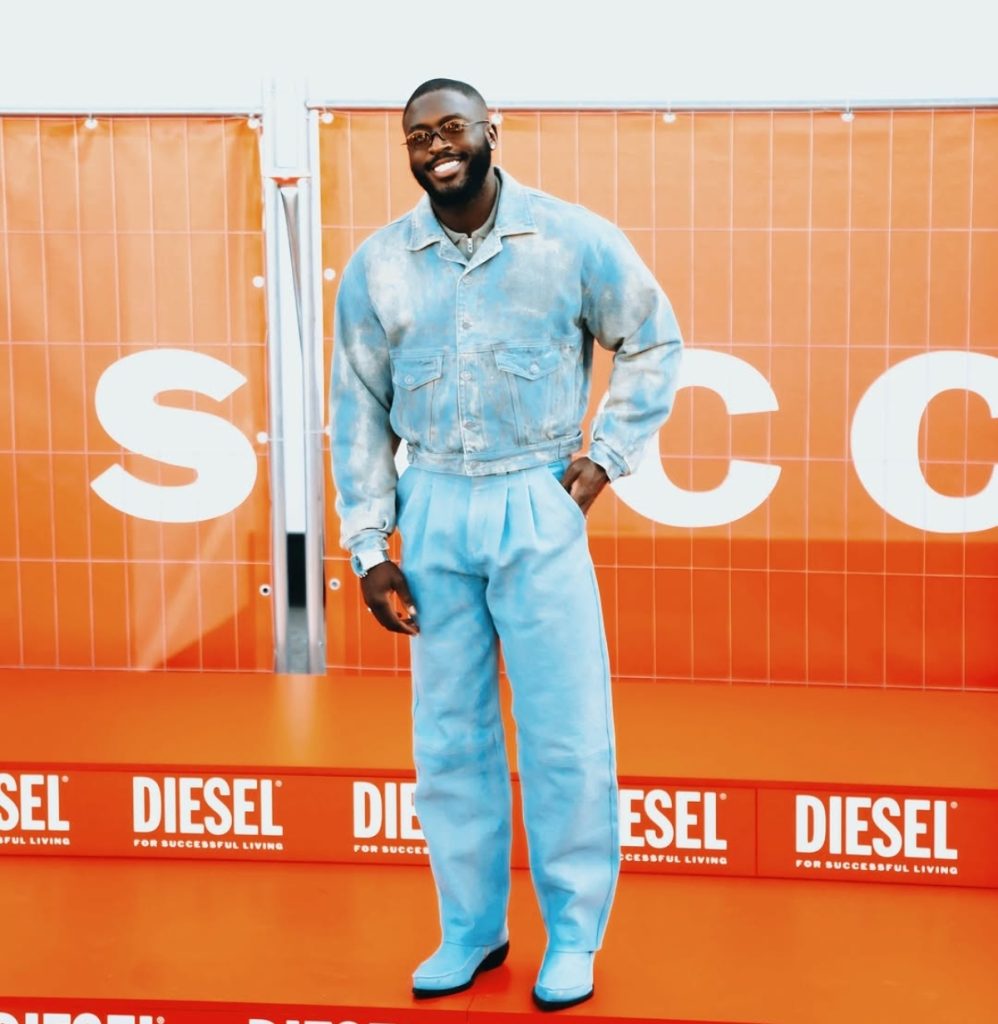
Mzansi stars Nomuzi “Moozlie” Mabena and Daliwonga were among the guests in Milan for Diesel’s Spring/Summer 2027 runway show, as the Italian fashion house presented what would become a significant final chapter for creative director Glenn Martens.
The show took place on September 22 at Via Moncucco, 35, as part of Milan Fashion Week, which runs from September 22 to 28 and brings together some of the biggest names in global fashion.
For Moozlie and Daliwonga, their appearance placed two prominent South African names within an international fashion environment known for attracting musicians, entertainers, models and cultural figures.
The Diesel SS27 show was particularly significant because it marked Martens’ final runway collection for the brand after six years at the creative helm.
A final show with a party atmosphere
Rather than treating the collection as a conventional farewell, Martens turned the presentation into an immersive club experience.
Around 200 performers from the Marseille-based collective (LA)HORDE were incorporated into the show, blurring the boundaries between the runway and the audience. The venue was transformed with red lighting, music and performers, creating an atmosphere closer to an underground club night than a traditional fashion presentation.
The soundtrack included a reworking of Donna Summer’s “Love to Love You Baby”, while the performers interacted with the crowd throughout the presentation.
Diesel described the collection through the ideas of being “disruptive, sexy, fluid, fun”, with Martens describing the Diesel experience as one where “the party always comes first”.
The clothes reflected that attitude, with denim, tailoring, revealing silhouettes, distorted proportions, cut-outs and trompe-l’œil techniques forming part of the collection.
Some denim pieces were treated to resemble leather, while garments were manipulated to appear as though they had been thrown together after a long night out. Orchid-inspired cut-outs, low-rise silhouettes and deliberately undone styling were also prominent.
The end of the Glenn Martens era
Martens joined Diesel in 2020, taking over the creative direction of a brand that had built its identity around denim, individuality and an irreverent approach to fashion.
Diesel was founded by Renzo Rosso in 1978 and initially established itself around innovative denim, later developing into an international lifestyle and fashion brand. The company says its philosophy has remained centred on passion, individuality and personal expression.
Martens brought a new visual language to the house, combining Diesel’s denim heritage with experimental silhouettes, provocative campaigns and unconventional fashion-show concepts.
Diesel’s own history describes the brand as an alternative to established luxury fashion, while its work under Martens increasingly placed denim and street culture alongside high-fashion experimentation.
His final SS27 collection therefore served as both a runway and a celebration of the creative direction he had established since 2020.
Diesel founder Renzo Rosso paid tribute to Martens following the announcement of his departure, saying: “Glenn Martens’ contribution to Diesel has been extraordinary.”
Rosso added: “Through his vision, talent and commitment, he has transformed the way the brand is perceived, forging a strong connection with younger generations and creating a solid foundation for its future.”
He also said Martens had “brought Diesel back to the centre of the global fashion conversation” while maintaining the brand’s “openness, energy and accessibility”.
Moozlie and Daliwonga in Milan
The presence of Moozlie and Daliwonga adds a distinctly South African dimension to the global fashion moment.
Moozlie has established herself across South African music, fashion and entertainment, moving between music, presenting, brand collaborations and fashion spaces over the course of her career. Her appearance at the Diesel show continues her association with international fashion and the intersection between music and style.
Daliwonga, meanwhile, has become one of the recognisable voices associated with the global rise of amapiano. His presence at an international fashion event also reflects the increasingly visible relationship between South African music and global fashion and lifestyle culture.
Their appearance alongside an international audience in Milan comes at a time when African musicians and entertainers are increasingly being incorporated into major global fashion events, with music, celebrity and fashion operating as interconnected parts of popular culture.
A farewell built around Diesel’s DNA
Despite being Martens’ final Diesel show, the SS27 collection was not presented as a retrospective.
Instead, it pushed further into the elements that had come to define his Diesel era – denim, experimentation, sexuality, individuality, youth culture and an irreverent approach to the traditional runway.
The result was a show that deliberately made the audience part of the spectacle.
As Martens prepared to leave Diesel, the brand described his tenure as a period of extensive creative and cultural repositioning, saying he had strengthened its international relevance while maintaining its democratic and inclusive identity.
With Moozlie and Daliwonga among the guests, the Milan show also provided a snapshot of the increasingly global conversation around fashion, music and South African popular culture.
For Diesel, however, September 22 marked the closing of one era – and the final runway bow of the designer who had spent six years reshaping its modern identity.
