

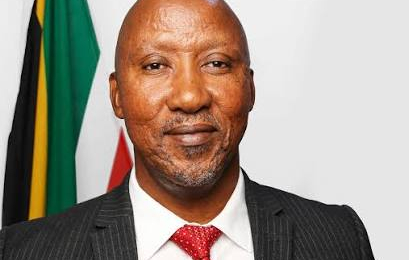
The new head of the Special Investigating Unit (SIU), Leonard Lekgetho, has warned that deliberately splitting government tenders can be used to bypass procurement controls and facilitate corruption.
Speaking to 702’s Bongani Bingwa, Lekgetho explained how officials can divide what should effectively be one procurement into several smaller transactions so that each falls below an approval threshold.
He said the practice had emerged repeatedly in the SIU’s investigations, although he cautioned against automatically labelling every instance of multiple contracts as corruption.
How tender splitting works
Lekgetho said the key concern is whether officials deliberately structure procurement so that decisions remain at a lower level of authority.
“For those little ones at the bottom, what they do, they split it in such a way that the decision-making level, it doesn’t go up,” he said.
“So it gets approved at a lower level.”
According to Lekgetho, this can mean senior officials or oversight structures never see the full value of the procurement because individual transactions remain within delegated approval limits.
He said tender splitting was not necessarily present in every case involving multiple contracts, but the SIU had found the practice occurring frequently enough to warrant concern.
“It’s just that it happens frequently,” he said.
Tembisa Hospital investigation
One of the clearest examples came from the SIU’s investigation into corruption at Tembisa Hospital.
Lekgetho described a procurement involving doctors’ laboratory coats, where different sizes were allegedly treated as separate procurements.
“They will procure size large as one procurement. Then they come to medium. It’s another procurement,” he explained.
The SIU head said the transactions were allegedly structured this way to keep each procurement below the R500,000 threshold.
“You see that it’s the same thing,” he said.
Lekgetho described the Tembisa example as a deliberate and orchestrated form of tender splitting, saying the SIU found that some of the goods were never delivered.
“There isn’t any explanation at all that can be given for that,” he said. “But that’s a typical split of tender.”
The SIU’s investigation into Tembisa Hospital has uncovered allegations of widespread corruption, including bid-rigging, money laundering and procurement irregularities. The investigation previously identified numerous officials for possible disciplinary action.
Transport Department contracts under scrutiny
Lekgetho’s comments come as questions have been raised over about R6.795 million in livestreaming and media services procured by the Department of Transport through seven separate requests for quotations.
The Auditor-General questioned whether the recurring nature of the services meant the department should have consolidated its requirements and subjected them to an open competitive bidding process.
The individual contracts were below the R1 million threshold associated with open competitive bidding, with successful quotations ranging from about R830,000 to R997,050.
The department has rejected the suggestion that the contracts were deliberately split. It has argued that the procurement related to different events and campaigns, with separate scopes, timelines, deliverables and technical requirements.
Lekgetho acknowledged that there could be legitimate reasons for different contracts.
“It seems like a reasonable” explanation, he told Bingwa, particularly where different events take place in different locations.
He said, for example, an organisation could legitimately want different service providers operating in different areas rather than giving one company responsibility for an entire national requirement.
“But it depends on the facts in terms of what happened,” he said.
When does it become corruption?
The distinction, according to Lekgetho, comes down to intention and the circumstances surrounding the procurement.
Where genuinely separate requirements are procured independently, having several contracts does not automatically mean wrongdoing.
However, deliberately dividing one requirement into smaller transactions to avoid a competitive process is a different matter.
The SIU has warned that repeated purchases of similar goods or services, transactions occurring within short periods, the same suppliers repeatedly receiving work and spending that consistently falls just below procurement thresholds can all be warning signs.
The issue is particularly serious because splitting procurement can prevent higher levels of authority from exercising oversight.
It can also reduce competition and potentially create opportunities for preferred suppliers to receive government work without going through a full tender process.
A problem the SIU has seen before
The Tembisa Hospital investigation illustrates how procurement weaknesses can become part of broader corruption networks.
The SIU found that officials allegedly kept transactions below the R500,000 threshold, allowing them to use a three-quotation process instead of a more rigorous competitive procurement procedure.
The investigation identified allegations involving corruption, money laundering, collusion and bid-rigging.
For Lekgetho, who has spent decades working in investigations, the answer is not simply to prosecute wrongdoing after it occurs, but to strengthen systems so suspicious procurement can be identified earlier.
He said institutions need proper procurement planning and should not wait until the last minute before identifying their requirements.
SIU wants stronger prevention
Lekgetho said the SIU has developed a national anti-corruption risk assessment framework designed to identify warning signs before corruption takes place.
“We have developed a national anti-corruption risk assessment framework,” he said, explaining that the aim was to identify triggers that could expose problematic practices at an earlier stage.
The SIU also works with the Auditor-General, with the two institutions having a memorandum of understanding that allows certain matters to be referred for investigation.
Lekgetho said the SIU’s role also includes identifying weaknesses in government systems and helping departments address them.
“We don’t want to come back and investigate the same thing,” he said.
Instead, the unit works with departments to develop action plans addressing weaknesses in policies, delegations of authority and other internal controls.
The warning comes as government faces renewed scrutiny over how public money is spent and whether procurement systems are sufficiently robust to prevent officials from manipulating thresholds.
For the SIU, the challenge is not simply identifying suspicious tenders, but determining whether apparently separate purchases are genuinely independent or have been deliberately structured to avoid scrutiny.
As Lekgetho’s Tembisa example demonstrates, when the same requirement is broken into smaller pieces purely to remain below a procurement threshold, what may initially appear to be a series of ordinary purchases can become evidence of a much more serious scheme.
