

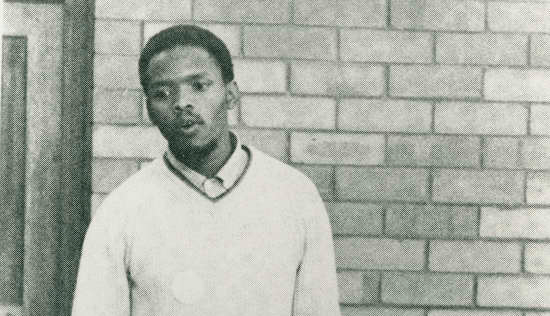
Nearly 49 years after Steve Bantu Biko died in apartheid police custody, the question that has haunted South Africa for generations is back before a court: who was responsible for the death of the Black Consciousness Movement leader?
The reopened inquest into Biko’s death is set to get underway at the High Court in Gqeberha on Monday, 24 August 2026, after years of delays over legal representation and funding for two surviving former apartheid police officers identified as persons of interest.
The case is one of South Africa’s most significant unresolved apartheid-era deaths. It is not simply a historical exercise. Prosecutors want the court to determine whether the evidence supports a finding that an act or omission by any person amounted, prima facie, to a criminal offence.
The man who became a symbol of apartheid brutality
Biko was 30 when he died on 12 September 1977.
A founder and leading figure of the Black Consciousness Movement, he had become one of the apartheid government’s most prominent opponents. His philosophy of Black self-reliance, dignity and psychological liberation resonated with a generation of young South Africans and helped shape the political consciousness that challenged apartheid.
On 18 August 1977, Biko and his colleague Peter Jones were stopped at a roadblock near Grahamstown, now Makhanda. Biko was arrested for breaching banning restrictions that confined him to the King William’s Town area.
He was taken to Walmer Police Station in Port Elizabeth, now Gqeberha.
According to the National Prosecuting Authority, Biko was allegedly tortured while in detention. He was shackled, kept naked and severely injured. When his condition deteriorated, he was eventually transported, still unconscious and shackled, more than 1,000km to Pretoria.
He died on 12 September 1977 from extensive brain damage and acute kidney failure and uraemia.
The original inquest and the police version
The first inquest produced a finding that would remain deeply controversial.
Security Branch officers claimed Biko had been injured during a scuffle after he attacked an officer with a chair. They said he had struck his head against a wall while they were attempting to restrain him.
The presiding magistrate accepted that explanation and found that Biko’s injuries had been sustained during the altercation.
No one was prosecuted.
The Eastern Cape Attorney General subsequently declined to prosecute anyone over Biko’s death in February 1978. The original inquest has since been widely criticised as inadequate and compromised, particularly in light of evidence that emerged years later.
The National Prosecuting Authority has described the purpose of the reopened process as putting evidence before the court so that it can determine whether Biko’s death was brought about by an act or omission that, on the face of it, amounted to an offence.
What the TRC revealed
The Truth and Reconciliation Commission revisited Biko’s death in the late 1990s.
Five former senior Security Branch officers from the Gqeberha area, Major Harold Snyman, Captain Daniel Petrus Siebert, Captain Jacobus Johannes Oosthuysen Benecke, Warrant Officer Rubin Marx and Sergeant Gideon Johannes Nieuwoudt — applied for amnesty in connection with Biko’s death.
Their accounts centred on the claim that Biko had been injured during the alleged scuffle.
But the TRC rejected their applications. The officers acknowledged that they had colluded and fabricated versions of events during the original investigation, while their evidence was found to be contradictory and did not satisfy the requirements for amnesty.
That left one of the most important questions surrounding Biko’s death unresolved: if the original police account was false, what actually happened inside the interrogation rooms and cells?
Two former police officers are still alive
The reopened inquest has taken years to reach this point.
When the matter was formally reopened in September 2025, prosecutors told the Gqeberha High Court that two persons of interest were still alive.
The proceedings were subsequently postponed several times while arrangements were made for their legal representation. In February 2026, the court again adjourned the matter to allow the State to finalise legal representation for the two former officers.
The legal issue became particularly important because the two men had applied for state funding for their legal defence.
Those delays have now been cleared sufficiently for the inquest to proceed.
The latest case-management process has paved the way for the matter to return to the Gqeberha High Court, where the evidence surrounding Biko’s final days will be revisited.
What the NPA wants the court to establish
The NPA has been clear that the reopened inquest is not merely about rewriting the historical record.
Its stated objective is to establish whether Biko’s death was caused by an act or omission that could constitute a criminal offence.
In its 2025 announcement, the NPA said the reopening followed approval by Justice and Constitutional Development Minister Mmamoloko Kubayi of National Director of Public Prosecutions Shamila Batohi’s request, which was supported by the Biko family’s legal representatives.
NPA Eastern Cape spokesperson Luxolo Tyali previously said the purpose of the inquest was to place evidence before the court that would allow it to determine whether Biko’s death was caused by someone’s failure to prevent it.
The NPA has also said the process is intended to assist in bringing closure to the Biko family and South African society.
A family and movement still demanding answers
For the Biko family, the reopened proceedings represent an opportunity to confront a version of history that has stood for almost half a century.
The family has been represented by Advocate Tembeka Ngcukaitobi, who previously told the court that the decision to reopen the inquest on the anniversary of Biko’s death was significant.
The timing, he said, was agreed between the State and the family.
The case has also been closely followed by the Azanian People’s Organisation (AZAPO), which has renewed its demand for accountability.
Ahead of the latest proceedings, AZAPO said the pursuit of justice for Biko had been delayed for almost 49 years and argued that the process must go beyond correcting the historical record to identify those responsible for his torture and death, as well as those involved in the subsequent cover-up.
The question is bigger than one man
Biko’s death became one of the defining symbols of apartheid’s brutality.
His body was returned to his family after his death, but the circumstances surrounding his final days remained contested. His funeral in King William’s Town drew thousands and transformed his death into an international symbol of resistance.
The significance of the new inquest therefore extends beyond identifying individual responsibility.
It potentially places the conduct of apartheid’s security apparatus, the original investigation, the medical treatment Biko received and the subsequent attempts to explain away his injuries under renewed judicial scrutiny.
It also raises a painful question about how many decades it can take for families of apartheid-era victims to obtain an official reckoning.
Nearly 49 years later, the search for the truth continues
Biko died in 1977. The democratic South Africa he helped inspire only arrived in 1994.
Yet despite the Truth and Reconciliation Commission, subsequent investigations and years of campaigning, no one has been criminally prosecuted for his death.
Now, nearly five decades later, the High Court in Gqeberha has another opportunity to examine what happened.
The court will not bring Biko back. Nor can it undo the failures of the original inquest.
But it could finally establish, through evidence tested in a court of law, whether someone committed an offence that caused or contributed to the death of one of apartheid’s most influential opponents.
For a country that has carried Biko’s name, image and philosophy through generations, the question remains as powerful as ever:
Who killed Steve Bantu Biko?
