

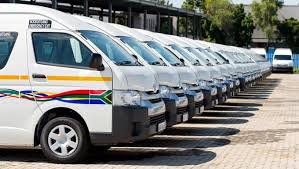
Thousands of commuters in Cape Town were left stranded on Friday, October 30, after an unofficial taxi go-slow disrupted public transport services across several parts of the city, with the knock-on effects extending to Cape Town International Airport.
Nyanga and Wynberg were among the hardest-hit areas, with no taxis operating, while Mfuleni, Langa and the Cape Town Station Deck experienced reduced services.
Western Cape Mobility Department spokesperson Byron La Hoe said officials began monitoring the situation early on Friday morning.
“Early morning monitoring confirmed disruptions at several taxi ranks, with services either suspended or operating at reduced capacity,” La Hoe said.
The department said it had not received formal communication from the taxi industry about the suspension or reduction of services. It deployed its Mobility Information Taxi to assist stranded commuters, manage queues and provide information about alternative transport.
Commuters were encouraged to use available MyCiTi bus and rail services where possible. The department also indicated that it was considering legal options to address the disruption.
The go-slow’s effects were particularly visible at Cape Town International Airport, where staff shortages placed security screening operations under pressure. Airports Company South Africa (ACSA) reported that approximately 50% of its employees had failed to report for duty because of safety concerns and transport difficulties.
Passengers faced lengthy queues at domestic and international departure terminals, with some fearing they would miss their flights. The disruption resulted in 60 reported flight delays by 1pm – 44 domestic departures, 11 international departures and five arrivals. The average delay was approximately 60 minutes, with no cancellations reported at that stage.
Acting regional manager Malcolm Koopman apologised to travellers and said additional personnel, including staff from other airports, had been brought in to support operations.
The airport advised international passengers to arrive four hours before departure and domestic travellers three hours ahead while the situation was being managed.
By Friday afternoon, ACSA reported that queues were easing and airport operations were gradually returning to normal.
The go-slow came amid escalating tensions within Cape Town’s taxi industry, particularly between the Cape Amalgamated Taxi Association (CATA) and the Cape Organisation for the Democratic Taxi Association (CODETA), over disputed operating routes linking Delft, Langa and Epping.
The City of Cape Town said that, following engagements with the South African National Taxi Council (SANTACO), taxi operations and routes were operational and on track for the Friday afternoon commute.
Mayoral committee member for urban mobility Rob Quintas said SAPS had reported no taxi-related incidents on Friday, while police, city and provincial safety teams maintained a visible presence at transport ranks, stations and along affected routes.
The disruption highlighted the wider economic and social consequences of instability in the taxi industry, with workers, businesses, air travellers and ordinary commuters bearing the impact of interruptions to daily transport services.
