

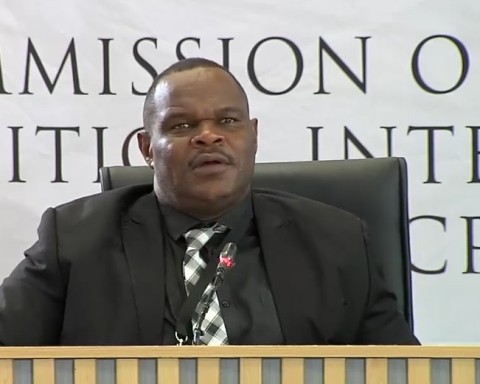
Suspended South African Police Service (SAPS) Sergeant Fannie Ezekiel Nkosi has formally resigned from the police service, bringing his career in law enforcement to an end as he remains behind bars facing serious criminal charges.
The SAPS confirmed on Saturday, 24 October 2026, that it had received Nkosi’s resignation letter, which was submitted on Friday, 23 October, reportedly ahead of an internal disciplinary hearing.
National police spokesperson Brigadier Athlenda Mathe confirmed receipt of the letter, saying: “We have received the letter of his resignation.”
Nkosi, who was attached to the Gauteng Organised Crime Unit, became a prominent figure in the Madlanga Commission of Inquiry after giving testimony about alleged links between senior police officials and individuals suspected of involvement in organised crime.
His resignation comes amid mounting legal and professional difficulties, including criminal proceedings relating to firearms, ammunition, explosives, alleged theft and the handling of police case dockets.
However, leaving the police service does not bring an end to the criminal proceedings against him. Nkosi remains in custody after being denied bail, while his legal team is seeking to have the charges against him reconsidered by the National Prosecuting Authority (NPA).
Resignation ahead of disciplinary proceedings
Nkosi’s departure from SAPS follows a period of intense scrutiny over allegations of misconduct linked to his police duties and testimony before the Madlanga Commission.
The internal disciplinary process was reportedly set to examine allegations against him following his appearance before the commission. His resignation was submitted before the proceedings could run their course.
The development raises questions about accountability within the police service, particularly when officers facing allegations of serious misconduct leave the organisation before internal disciplinary processes are concluded.
SAPS has confirmed receiving the resignation letter. The confirmation does not, by itself, establish the outcome of any outstanding disciplinary allegations or affect the separate criminal cases before the courts.
Nkosi’s resignation also comes while he remains in detention, meaning he will continue to face his legal battles outside the police service.
From commission witness to accused
Nkosi came under national scrutiny through his appearance before the Madlanga Commission of Inquiry, which is investigating allegations of corruption, criminal infiltration and improper relationships between police officials and individuals linked to organised crime.
During his testimony, allegations emerged about his relationships with senior police figures and alleged underworld associates, including suspended former deputy national police commissioner Shadrack Sibiya and controversial businessman Vusimuzi “Cat” Matlala.
The commission heard claims that Nkosi had acted as an intermediary between individuals in the police service and people linked to criminal networks. His alleged role in communicating with different parties and facilitating transactions became a focus of questioning.
One of the issues examined was the alleged delivery of 20 impalas from Matlala to Sibiya’s farm. Nkosi acknowledged helping to arrange the delivery but disputed the suggestion that it was a bribe.
Other testimony raised questions about the handling of sensitive information, police investigations and alleged relationships between officers and people under investigation.
These allegations have contributed to broader concerns about whether criminal networks may have had access to sensitive police operations and whether official positions were potentially exploited for purposes outside the law.
Nkosi’s testimony formed part of the commission’s wider examination of alleged wrongdoing within law enforcement. The allegations aired at the inquiry must be distinguished from criminal charges, which require proof in court.
Arrested after raid at Pretoria North home
Nkosi’s legal troubles escalated on 2 April 2026, when a task team linked to the Madlanga Commission investigation arrested him following a search of his home in Pretoria North.
Investigators reportedly recovered firearms, ammunition, a stun grenade, police case dockets and other items during the operation. More than R52,000 in cash was also reportedly found concealed beneath a mattress.
The discovery of police dockets and state-related equipment at his residence raised questions about how the material came to be in his possession and whether the relevant procedures governing the handling and safeguarding of official documents and firearms had been followed.
Nkosi faces charges that include theft, defeating the ends of justice, unlawful possession of explosives, and multiple counts relating to the failure to safeguard firearms and ammunition. Money laundering has also featured in reporting on the charges against him.
The State’s allegations remain to be tested in court, and Nkosi is presumed innocent unless proven guilty.
Bail denied as Nkosi remains in custody
Nkosi has been denied bail and remains in custody while the criminal proceedings continue.
During his bail application, the State argued that his release could jeopardise the investigation and the administration of justice. Prosecutors raised concerns about the possibility of interference with witnesses, obstruction of the investigation or evasion of trial.
The court rejected his bail application, finding that he had not satisfied the requirements for release in the interests of justice. His subsequent attempt to challenge the bail decision was also unsuccessful.
His continued detention means that his resignation from SAPS does not alter his immediate circumstances. He will remain in custody pending further court proceedings unless a court orders otherwise.
In the Pretoria case, proceedings were postponed to 5 November 2026 for the outcome of representations submitted to the NPA. His legal team is seeking a reconsideration of the charges, with the possibility of having them reduced or withdrawn.
Separate case involving a police docket in Limpopo
Nkosi is also facing a separate matter linked to an alleged incident at the Thohoyandou police station in Limpopo.
The allegations relate to a November 2022 drug bust during which police reportedly seized dagga, illegal firearms and explosives.
The State alleges that Nkosi later went to the police station and falsely represented himself as a senior officer sent from SAPS head office to obtain the original case docket.
He is further accused of returning months later, allegedly presenting himself as a colonel and removing confiscated dagga from police custody. Investigators subsequently discovered that evidence bags containing the drugs had allegedly been tampered with.
The case raises serious questions about the integrity of evidence handling and the security of exhibits held by police, particularly where the allegations involve an officer who would have been familiar with investigative procedures.
Nkosi denies wrongdoing and is entitled to challenge the allegations through the criminal justice process.
The Limpopo matter has been centralised with the existing Pretoria charges for purposes of the proceedings, although the allegations arising from the separate incidents remain distinct.
What Nkosi’s resignation means for the cases against him
Nkosi’s resignation removes him from active service within SAPS, but it does not resolve the allegations against him or prevent prosecutors from pursuing criminal charges.
The criminal cases are separate from internal disciplinary proceedings. Resigning from the police service does not amount to an admission of guilt, nor does it mean that the charges will automatically be withdrawn.
The NPA must still consider the representations made by his legal team, while the courts will determine how the criminal matters proceed.
His case has become part of a wider national debate about accountability in law enforcement, particularly amid the Madlanga Commission’s examination of alleged links between police officials, senior leadership and individuals suspected of involvement in organised crime.
For now, Nkosi remains in custody, his criminal matters are ongoing, and the outcome of the representations to prosecutors is expected to be addressed at his next scheduled court appearance.
His resignation marks a significant development in the controversy surrounding his career, but the legal questions at the centre of the cases remain unresolved.
