

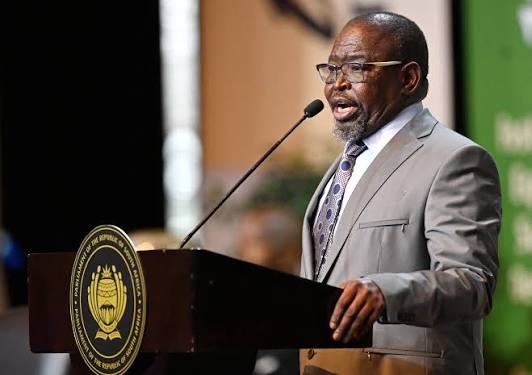
Finance Minister Enoch Godongwana says government is preparing tighter measures to regulate how municipalities spend conditional grants, with details expected when he delivers the Medium-Term Budget Policy Statement (MTBPS) in Parliament on 21 October 2026.
Godongwana made the announcement while answering questions in the National Assembly on Wednesday, 30 September, during questions to ministers in the economic cluster.
He said National Treasury was working with the departments responsible for transferring conditional grants to ensure that the money is used for the purposes for which it was allocated.
“We are putting in regulatory frameworks to achieve those objectives, of making sure conditional grants are used for what they are intended for,” Godongwana said.
He added that a review of some of the grants would also be presented during the MTBPS.
Why municipalities are under scrutiny
The announcement comes amid continued concern over municipal finances, spending and service delivery.
Conditional grants are funds transferred by national government to provinces or municipalities for specific purposes. Unlike an unrestricted allocation, they come with conditions governing how the money should be used.
National Treasury has increasingly linked the release of funding to municipalities’ ability to comply with financial management and reporting requirements.
In July, Godongwana withheld equitable-share funds from 69 municipalities after concerns about their failure to account adequately for the use of funds. SABC reported that some municipalities had also been using funds intended for specific purposes for operational expenditure.
Only a small number of municipalities remained non-compliant at the time of Godongwana’s latest parliamentary response, with those municipalities receiving tranches of conditional funding only after meeting specified conditions.
Godongwana: grants must be used for their intended purpose
Responding to questions from MPs, Godongwana acknowledged that some municipalities were incorrectly using conditional grants.
“In certain circumstances, municipalities are actually using the conditional grants incorrectly,” he said.
He said Treasury was therefore working with the relevant transferring departments to strengthen the regulatory framework.
“The relevant department that makes transfers” would be involved in ensuring that the conditions attached to grants were properly enforced, he explained.
The minister said the forthcoming review was intended to address weaknesses in the existing system and prevent what he described as abuses of conditional grants from continuing.
“There is also a review which will highlight, as we table the medium-term budget policy statement on the 21st, some of these grants to avoid some of those abuses going forward,” he said.
A wider municipal financial crisis
The planned measures form part of a broader government effort to address persistent financial and operational problems in local government.
The 2026 Budget identified municipalities as facing significant financial and operational distress. Government said structural reforms were being introduced to strengthen financial sustainability, improve infrastructure delivery and address persistent underspending and capacity constraints.
One of the reforms involves the Municipal Infrastructure Grant. Under the model announced in the 2026 Budget, municipalities with sufficient capacity can continue receiving funding directly, while municipalities with serious capacity or governance problems may have infrastructure funding delivered through capable district municipalities or implementing agencies.
The government said the intention is to ensure that infrastructure projects are delivered even where a municipality lacks the capacity to manage them directly.
Treasury wants tighter spending controls
Godongwana also told MPs that Treasury was developing guidelines to improve spending and savings at local government level.
He said municipalities were being engaged as institutions, with Treasury working to identify their major cost drivers and ensure they operate within their existing budgets.
However, he said some of the broader processes would be escalated after the 4 November 2026 local government elections, given the changes that could take place in municipal political leadership.
The minister stressed that Treasury did not take pleasure in withholding money from municipalities because of the consequences this can have for communities, but argued that government had to confront the financial problems facing local government.
What will be announced on 21 October
The MTBPS is expected to provide greater detail on how the new regulatory framework will work, which conditional grants will be reviewed and what additional controls municipalities could face.
The announcement comes as government tries to balance two competing priorities – ensuring municipalities receive money needed for infrastructure and basic services, while preventing funds from being diverted, underspent or used for purposes other than those for which they were allocated.
National Treasury’s 2026 expenditure framework allocated R58.5 billion in conditional grants to local government in the outer year of the medium-term period, illustrating the significant amount of public money subject to these grant arrangements.
For Godongwana, the issue is ultimately about making sure that money allocated to municipalities translates into the services and infrastructure for which it was intended.
The full details of the proposed changes are expected when he tables the MTBPS in Parliament on 21 October.
