

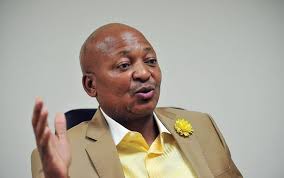
He exposed the alleged exploitation of artists by the Steyn Entertainment Group. He exposed political skeletons, called EFF president Julius Malema short-sighted, Floyd Shivambu the brains behind the man, and Ndlozi an intellectual.
South African politician and businessman Kenny Kunene has once again found himself at the center of public debate following a candid and controversial appearance on Podcast and Chill, hosted by MacG.
Kunene, a senior figure in the Patriotic Alliance, is no stranger to headlines. Known for his flamboyant personality, business ventures, and outspoken political views, he utilized the popular platform to share startling revelations about politics, power dynamics, and his personal journey from convicted businessman to political leader.
During the interview, Kunene revisited his controversial past, including his conviction for fraud in the early 2000s. Rather than sidestepping the topic, he addressed it directly, describing prison as a turning point in his life. He framed his incarceration as a period of reflection and reinvention, arguing that it shaped his resilience and political ambition.
His openness about the stigma of a criminal record in public office sparked intense reactions online, with some praising his transparency while others questioned his suitability for leadership.
One of the most talked-about moments of the episode came when Kunene lifted the lid on what he described as the “real politics” behind closed doors. He spoke about coalition negotiations, internal party tensions, and the strategic maneuvering that often goes unseen by voters.
While careful not to disclose confidential details, his comments hinted at deep rivalries and fragile alliances within municipal and provincial governments. These remarks fueled speculation about shifting political dynamics ahead of future elections.
He labelled former friend and confidant Julius Malema as a half-thinker, Floyd Shivambu and the brains behind EFF, and Mbuyiseni Ndlozi as an intellectual.
Julius Malema has since taken to social media to threaten legal action after Kunene voiced his opinions.
He is currently back making music, which he started in the early 2000s as one of his passions, and released his return single title Hamba.
Kunene accused the Steyn Entertainment Group, owned by TJJ Steyn and Dale De Ruig, of exploiting black artists.
“Zoocci Coke Dope (Sibabalwe Fiphaza) is like a son to me. These people have sought to destroy him. The son of Steyn has employed a ruthless boy and a white racist boy towards black artists. All of them are messing up black artists in South Africa. Zoocci has no capacity to fight them in court. They have forged his signature and included a clause that they knew nothing about. He has run out of money and lost his cars. But I have taken on his battles and I will get him out of that company.”
Kenny says he runs but does not own RMK Music Agency who are taking on new and talented artists.
“We have signed with Virgin Music Group and Sony. All my artists is wil get nice deals.”
Kunene also addressed long-standing public perceptions about his wealth and lifestyle. Once dubbed the “Sushi King” for his extravagant parties, he argued that his flamboyance had often overshadowed his policy positions and grassroots work.
He maintained that financial success should not disqualify someone from public service and emphasized the importance of economic empowerment, particularly for marginalized communities.
As expected, the episode quickly trended on social media. Supporters applauded Kunene for speaking “without a script,” saying his willingness to confront uncomfortable topics reflects authenticity. Critics, however, accused him of using controversy to remain politically relevant.
Regardless of where opinions fall, the interview reinforced the power of digital platforms like Podcast and Chill in shaping national conversations. Long-form podcasts increasingly provide politicians with opportunities to speak beyond traditional media soundbites — sometimes with explosive results.
Political analysts suggest the appearance may have been a strategic effort to broaden the Patriotic Alliance’s appeal, particularly among younger, urban audiences who make up a significant portion of the podcast’s listenership.
Whether the revelations will strengthen or weaken Kunene’s political standing remains to be seen. What is certain, however, is that his appearance has reignited debate about accountability, redemption, and the evolving relationship between politics and pop culture in South Africa.
 Cece Smith